
Risk Management · 2025
In this section5 topics
Risk Management Policy & Plan
Policy & Plan Description
Nutrition ProFess Public Company Limited (“the Company”) recognizes the importance of good corporate governance to drive the organization's stable growth and business expansion, maintain a strong financial position, and generate appropriate returns for shareholders. Therefore, the Company deems it appropriate to implement a risk management system with an operational framework and risk management procedures consistent with the principles of The Committee of Sponsoring Organizations of the Treadway Commission (COSO), an international standard. This is to ensure that stakeholders understand the principles of risk management and can apply them appropriately, by appointing a Risk Management Working Group to oversee the Company's operations in accordance with the organization's risk management policy, as follows:
-
The risk management process is to be an integral part of decision-making in setting strategies, planning, and operations of the company at the overall organizational level, to reflect the organization's management and corporate governance policies, and to achieve organizational objectives in terms of both efficiency and effectiveness of work.
-
Risk management is to be the responsibility of employees at all levels of the organization, who must be aware of the risks in their own departmental operations and the overall organization, and manage various risks to an appropriate or acceptable level, so that the organization achieves its desired objectives within its vision and mission framework.
-
Risk management is to be an integral part of creating an internal organizational environment, serving as a crucial foundation for operations. This begins with educating employees within the organization to understand, comprehend, and be aware of risks, and to participate in critical thinking, analysis, and forecasting of potential events or risks, ensuring they remain at an appropriate or acceptable level.
-
Aims to continuously promote, support, and provide knowledge and understanding of risk management processes and guidelines to executives and employees. This is to instill a culture where personnel at all levels recognize the importance and shared responsibility in the organization's risk management operations, making it an integral part of the organizational culture that leads to Value Creation.
-
Each department is responsible for assessing risks, defining risk indicators arising from internal and external factors, prioritizing existing risks based on their likelihood, prevention and mitigation approaches, potential impacts or losses, and regularly monitoring and evaluating risk management outcomes to ensure the appropriateness and effectiveness of risk management, as well as preparing risk-related reports according to the operational framework and risk management procedures.
-
Employees who identify or become aware of risks that may affect the company are required to immediately report such risks to relevant parties for further risk management actions.
-
The organization is to establish an information system for collecting past data and events to serve as a database for organizational risk management. This system will support personnel at all levels in accessing information according to their defined rights, for use in analyzing and evaluating potential events, identifying their likelihood and appropriate impacts, as well as establishing an efficient risk management reporting system for executives, the Risk Management Working Group, the Audit Committee, and the Board of Directors.
-
Allocate budgets at both departmental and overall organizational levels to support risk mitigation where feasible, prioritizing based on impact to the organization, to reduce risk levels to low or acceptable levels.
Risk Management Structure
The company's organizational risk management structure is as follows:
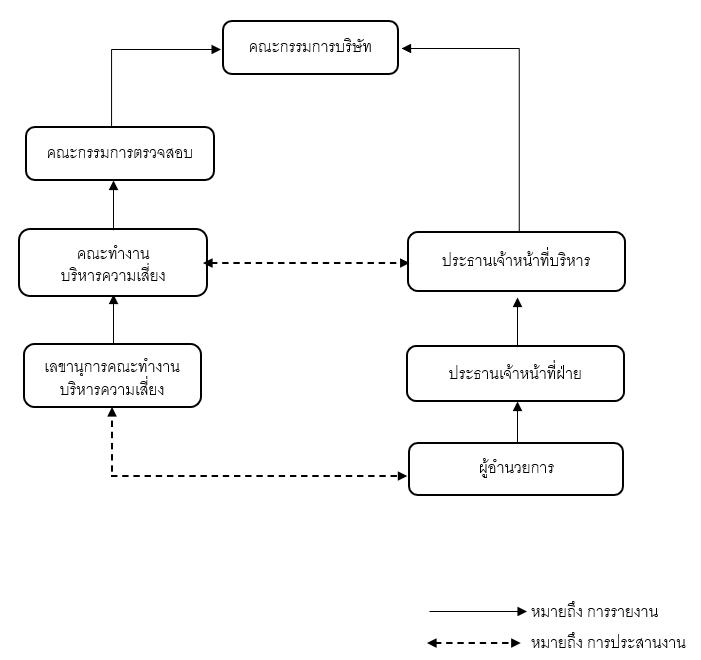
Risk Management Plan
The company has the following organizational risk management operational plan:
|
Details |
Year 2025 |
|
February |
|
|
|
|
|
May 8 |
|
August 4 |
|
August 11 |
|
November 4 |
|
November 11 |
|
Details |
Year 2026 |
|
February 27 |
|
|
|
|
|
May 11 |
|
August 3 |
|
August 10 |
|
November 4 |
|
November 11 |
|
Details |
Year 2027 |
|
February |
Risk Factors — Overview
Risk Factors — Introduction
Investing in the company's shares carries risks. Before making an investment decision, investors should carefully study all information in this document, especially the various risk factors detailed below. In making an investment decision, investors must independently study information regarding the company's business and financial position, as well as other company-related information.
The following statements describe significant risks that could negatively impact the company's business, financial position, and share value. Additionally, the company may not be aware of certain risks, and there may be other risks that the company currently believes are not material but which may become material risks in the future, potentially affecting the company's operations or business opportunities.
Furthermore, this document contains forward-looking statements, which involve risks and uncertainties. Investors should consider such statements with caution, as actual operating results may differ significantly from the estimates stated in such forward-looking statements. This is due to various factors, including the risk factors identified below and elsewhere in this document.
Risks to the Company's Business Operations
Introduction
Significant risks impacting the company include strategic and business risks. Regulatory and legal risks Management and operational risks, financial risks, and Investment risks for securities holders
Risk Register
| Risk Name | Risk Characteristics | Consequences | Management Measures | Related Risk Factors | ||||||||||||||||||||||||||||||||||||||||||||||||||||||||||||||||||||||||||||||||||||||||||||||||||||||||||||||||||||||
|---|---|---|---|---|---|---|---|---|---|---|---|---|---|---|---|---|---|---|---|---|---|---|---|---|---|---|---|---|---|---|---|---|---|---|---|---|---|---|---|---|---|---|---|---|---|---|---|---|---|---|---|---|---|---|---|---|---|---|---|---|---|---|---|---|---|---|---|---|---|---|---|---|---|---|---|---|---|---|---|---|---|---|---|---|---|---|---|---|---|---|---|---|---|---|---|---|---|---|---|---|---|---|---|---|---|---|---|---|---|---|---|---|---|---|---|---|---|---|---|---|---|---|
| Revenue concentration risk from a few key products | The company sells dietary supplements and cosmetics, with its highest-selling products being the Yes Care dietary supplement under the REALELIXI trademark, the Alfa Chlorophyll dietary supplement under the REALELIXI trademark, and the Astacia 14 Complex dietary supplement under the CMF trademark. Their combined sales for the years 2022 – 2025 amounted to 37.17%, 7.71%, and 18.54% of total sales, respectively.
| The Company may face risks if negative impacts occur to such products, particularly the fluctuations in sales of such products, which depend on several factors beyond the Company's control, such as changes in consumer behavior and trends, declining brand popularity, increased competition, substitute products, economic slowdown, as well as the dissemination of false negative information about the products, etc., which could negatively impact the Company's business, operating results, and financial position. | To mitigate this risk, the Company continuously conducts marketing activities to build brand awareness and confidence in its products, thereby maintaining product sales and market share. Furthermore, the Company consistently develops new products to enhance diversity and mitigate the risk of over-reliance on any single product. Specifically: 1) The Company regularly launches new products, as each type of dietary supplement has a distinct Product Life Cycle, to prevent excessive dependence on revenue from any single product. This also involves developing dietary supplement ingredients to ensure maximum consumer benefit. 2) The Company implements marketing campaigns to stimulate sales. And 3) the Company employs a co-selling strategy for its products with celebrities, artists, actors, singers, or influencers, sharing benefits to boost sales and expand product awareness. Overall, the Product Life Cycle of the Company's products typically spans 2-3 years (measured by sales value of 10% or more, sustained for 2-3 years). Throughout the Product Life Cycle, the Company develops new formulations for existing products. This involves enhancing formulas by adding extracts or increasing beneficial properties, such as various 'Plus' formulas, which contributes to the continued acceptance of the Company's products. The Product Life Cycle of key products with sales exceeding 10% in 2025 can be described as follows:
| 737 · Other name: Revenue concentration risk from a few key products · Description: Other · Info category: STRATEGIC_RISK | ||||||||||||||||||||||||||||||||||||||||||||||||||||||||||||||||||||||||||||||||||||||||||||||||||||||||||||||||||||||
| Reliance on online sales revenue | The company generates revenue from selling both dietary supplements and cosmetics through online channels under the Digital Marketing category, which involves sales via social media platforms such as Facebook and TikTok. Sales from the Digital Marketing channel from 2022 – 2024 and 2025 were 39.1%, 50.60%, 57.50%, and 62.70% of sales revenue, respectively. Following the company's strategy since 2022, the company has focused on selling products through online channels. Facebook is the company's primary sales channel, with the revenue proportions for 2022 – 2024 and 2025 presented as follows: (Unit: Percentage)
| From the above data for 2022-2024 and 2025, it is evident that the company relies primarily on sales channels, especially the Facebook platform. Furthermore, in 2025, the company also relies on the TikTok channel. The company sells dietary supplements and cosmetics through online channels such as Facebook, TikTok, Lazada, and Shopee platforms. The company began implementing a strategy to focus on selling both dietary supplements and cosmetics through online channels in 2022 and has continuously developed and expanded this approach to the present. From 2022 to 2025, the company's revenue from online sales accounted for 44.20%, 59.50%, 69.40%, and 76.90% of total sales revenue, respectively. Additionally, sales through the Facebook platform accounted for an average of approximately 62.4% of online sales revenue over a three-year period. This poses a risk to the company should the aforementioned platform lose popularity, potentially leading to a loss of revenue. However, with current consumer behavior, there are more options for purchasing the company's various products through a wider range of channels. The company endeavors to sell products through various channels to cover consumer needs as comprehensively as possible. This is to reduce reliance on any single revenue channel, for which the company has consistently monitored consumer behavior. Furthermore, the company has implemented proactive sales operations, including providing after-sales services that extend from internal processes to external customer engagement. To foster repeat purchases of the company's products, based on the analysis of the company's customer database. | The company has a plan to increase sales revenue through alternative channels to reduce its reliance on online channel revenue, particularly from the Facebook platform. This involves specifically focusing on selling products in each channel, such as through the TV Home Shopping channel under the ALOKAA brand and the pharmacy (OTC) channel under the PNCP brand, among others. | 737 · Other name: Reliance on online sales revenue · Description: Other · Info category: STRATEGIC_RISK | ||||||||||||||||||||||||||||||||||||||||||||||||||||||||||||||||||||||||||||||||||||||||||||||||||||||||||||||||||||||
| Risk of over-reliance on product presenters for the promotion of dietary supplement products, which constitute the company's primary revenue. | The company operates a business manufacturing and distributing dietary supplements and cosmetics, which necessitates marketing activities to achieve widespread recognition among target customers. The company must engage product presenters to promote its products, carefully selecting those who can effectively convey the essence of the company's offerings. Customers recognize the image of these presenters based on their representation of the respective products. This indicates the company's primary reliance on product presenters. | The company therefore faces a risk if the aforementioned presenter subsequently gains a negative reputation, as it will also affect the company's products. Furthermore, if the presenter of the company's main product can effectively communicate or represent the product, but due to the annual contract renewal, if the said presenter does not renew the contract with the company, it could also impact the company's revenue. The company has products in the dietary supplement category, which constitute the company's main revenue. One such dietary supplement product is Yes Care, featuring Ms. Jeeranun Manochaem, also known in the entertainment industry as Khun Yui Jeeranun, as its presenter. The company's revenue from this product in 2025 accounted for 37%, and in 2023-2024, it accounted for 40% of sales revenue (with the same proportion for both years). For 2022, the revenue accounted for 10% of sales revenue. The revenue from this product was significantly important to the company from 2023 to 2025. Additionally, the company also has the product Astaxia 14 Complex, featuring Mr. Siwat Chotchaicharin, also known in the entertainment industry as Khun C-Siwat, as its presenter. The company's revenue from this product in 2025 accounted for 19% of sales revenue, and the sales revenue from Astaxia 14 Complex is also considered significant to the company. The customer feedback is considered to be in line with targets, allowing the company to assess whether its offerings meet customer needs. If the results meet the targets, the company will renew the presenter's contract. If the targets are not met, the company will seek a new presenter. | The company mitigates risks by engaging presenters. The company considers the following factors for selecting presenters: (1) Possesses a character that aligns with the target customer group, (2) Has a customer base that matches the company's product target group and possesses their own distribution channels, (3) Has a presentation style suitable for the application of the company's products, (4) Enjoys market popularity and is well-known in society, and (5) Maintains a good and appropriate image. For the renewal of presenter contracts, the company conducts an annual review to assess customer reception. Nevertheless, the company has continuously renewed contracts with the presenters of its main products every year until the present, since the initial contract in May 2022. | 737 · Other name: Risk of over-reliance on product presenters for the promotion of dietary supplement products, which constitute the company's primary revenue. · Description: Other · Info category: STRATEGIC_RISK | ||||||||||||||||||||||||||||||||||||||||||||||||||||||||||||||||||||||||||||||||||||||||||||||||||||||||||||||||||||||
| Risks from exaggerated advertising of dietary supplements beyond the scope of approval from the Food and Drug Administration, and the control of product communication and advertising. | The company operates a business manufacturing and selling dietary supplements. The company's dietary supplement products, classified as food, are subject to quality and standard requirements in accordance with the Food Act B.E. 2522 (1979) (and its amendments) ("Food Act") and other relevant Ministry of Public Health notifications. Therefore, the company must operate under various regulations, including obtaining manufacturing licenses and complying with regulations regarding correct labeling and advertising. The company has already completed all necessary product registrations and licensing. For product advertising, the company has invested in diverse advertising across multiple channels in line with its marketing strategy, such as television advertising or using product presenters, to ensure widespread recognition of its products. This includes, in particular, advertising on online platforms such as Facebook and TikTok, to enable the company's products to reach target consumers through advertising campaigns (running ads). | Such advertising may carry the risk of disseminating insufficient information or warnings, or misleading claims of exaggerated properties. The company has engaged presenters or influencers, as agreed upon by both parties, to assist in presenting the company's products. This includes online sales channels where the company operates Facebook pages and official accounts on platforms such as TikTok, Shopee, Lazada, and Line, totaling approximately one thousand Facebook pages and official accounts. Due to the numerous Facebook pages and official accounts across various channels, ensuring compliance with the company's advertising procedures by employees and communicating advertising requirements to presenters or influencers may not cover all channels on the company's online platforms. Consequently, there is a risk that the company may be subject to fines and advertisement suspensions by the FDA. In the past, from 2022 to 2025, the company received 36 letters ordering the suspension of advertisements. [In 2021, the company did not receive any letters from the FDA ordering the suspension of advertisements or demanding fines, as the company did not focus on online sales channels in 2021 (in 2021, the company's online revenue was 15%). The reason the company received letters ordering advertisement suspensions was due to the misunderstanding that advertisements claiming product benefits did not require authorization, which was an incorrect understanding, and these were old posts remaining in the system. Approximately 65% of these suspended advertisements were for Yes Care products, and the suspended advertisements originated from Facebook pages. A summary is as follows:]
| The company has stipulated that all advertisements across all channels must obtain prior approval from the Food and Drug Administration before publication. The company has submitted applications for food advertising permits through the e-submission system for convenience and speed in document submission. Therefore, it can be concluded that, as of now, the company has obtained food advertising permits for all formats, including online product sales and television home shopping (TV Home Shopping), which is an offline sales channel, as well as product-specific advertising (By Product). Currently, the company has established operational manuals for advertising media production and content creation control to comply with FDA announcements. Since late November 2024 until now, the company has not received any letters from the FDA regarding advertising matters. Regarding the news of a warning on the FDA's website concerning the dietary supplement Yes Care, which appeared as a warning on the website of the Food and Drug Administration ("FDA") regarding false advertising of the benefits, quality, or properties of the dietary supplement "Yes Care" dated August 20, 2024, the company has investigated and found that it was a fake Facebook page. The company has not received any official documents from government agencies stating that the company has committed any wrongdoing. The company has attempted to inquire with the agencies about the letter to be sent to the company for proper action, but has not received any letter from government agencies. For the warning message on the FDA's website, the company has already reported it to online platforms for the third-party Facebook pages. The messages displayed on the company's online advertising platforms still contain content similar to what the FDA warned the company about. As a result of the lingering warning messages, the content may still not comply with FDA regulations. The company has already deleted or blocked visibility (Clean Page) on its Facebook page and official accounts on Tik Tok, Shopee, Lazada, and Line platforms. The company has mandated that the Board of Directors be informed quarterly of the actions taken to delete or block visibility (Clean Page). Furthermore, if consumers complain to the FDA about exaggerated advertising of dietary supplements, it could impact the company's reputation, potentially causing consumers to delay orders and affecting the company's revenue, especially for Yes Care products, which generated 9.60%, 39.80%, 40.20%, and 37.20% of sales revenue in 2022-2025, respectively. If the company is ordered to suspend the production of Yes Care products due to complaints to the FDA and the FDA orders a production suspension, in the worst-case scenario, the company would lose approximately 37.2% of its total sales revenue from Yes Care products, which would not result in a net loss for the company. However, the company has a continuous plan to develop and launch new products to replace Yes Care products that may be subject to production suspension. However, the company is aware and has implemented control and monitoring measures as follows:
Regarding monitoring measures, the company has continuously implemented them to ensure compliance with the control measures established throughout the process to prevent exaggerated advertising of dietary supplements beyond what is permitted by the Food and Drug Administration. These measures include: 1) Operations and controls for advertising and permit applications according to the revised advertising procedures, approved by the Board of Directors' Meeting No. 2/2568 on February 13, 2568 (2025). This stipulates that information prepared for advertising media must comply with FDA announcements, requiring a final verification of words or messages before submitting an advertising permit application. And 2) Controls after obtaining permission (to ensure compliance with the granted permission). The company has established work procedures for controlling content creation operations to comply with the revised Food and Drug Administration announcements, approved by the Board of Directors' Meeting No. 1/2568 on January 13, 2568 (2025). This requires assigned personnel to communicate with contractors to explain the script content, and contractors must sign the script content summary to acknowledge and comply with the reviewed summary provided by the company. This serves as notification for the contractors to adhere to the guidelines. Internal auditors are assigned to audit compliance with the internal control system for these two matters. | 737 · Other name: Risks from exaggerated advertising of dietary supplements beyond the scope of approval from the Food and Drug Administration, and the control of product communication and advertising. · Description: Other · Info category: STRATEGIC_RISK | ||||||||||||||||||||||||||||||||||||||||||||||||||||||||||||||||||||||||||||||||||||||||||||||||||||||||||||||||||||||
| Risk of encountering fake Facebook pages on social media, or fake accounts, or the detection of counterfeit products. | The company sells both dietary supplements and cosmetics through various online sales channels such as Facebook, Lazada, Shopee, and TikTok. The company's sales revenue from online channels from 2022 to 2025 accounted for 44.26%, 59.27%, 69.43%, and 76.92% of total sales revenue, respectively. The company has received complaints from consumers and conducted its own investigations regarding fake Facebook pages or account owners and counterfeit products of the company. | The company may be affected by fake online social media or the detection of counterfeit products, which could impact the company's image, as well as the brands of both dietary supplements and cosmetics. | The company mitigates risks through the following methods: The company has established operational procedures regarding guidelines for dealing with fake Facebook pages and fake accounts on Tik Tok, Shopee, Lazada, and Line platforms, or when counterfeit products are detected. The key content is that in such cases, the company will report to each sales channel. This reporting to each sales channel is to inform them that the company has found fake account owners (Tik Tok, Shopee, Lazada, and Line), fake Facebook pages, or counterfeit products. Additionally, the company has submitted documents to each sales channel to confirm that its Facebook page or company account is authentic. Currently, the company has not found any fake Facebook pages or fake account owners on the Shopee and Lazada platforms. Regarding monitoring measures, operational staff monitor fake Facebook pages or fake account owners weekly and report on this monitoring monthly at Board of Directors meetings. In the case of Facebook platform channels where orders are placed without going through the central system of each platform, the company will assign its employees to purchase products from those fake Facebook pages to collect evidence of the purchase, seller, shipper, and recipient of funds. Once the product is received, it will be sent to the New Product Development department to verify whether it is a genuine company product. If it is a counterfeit, evidence will be collected, and legal action will subsequently be pursued. | 737 · Other name: Risk of encountering fake Facebook pages on social media, or fake accounts, or the detection of counterfeit products. · Description: Other · Info category: STRATEGIC_RISK | ||||||||||||||||||||||||||||||||||||||||||||||||||||||||||||||||||||||||||||||||||||||||||||||||||||||||||||||||||||||
| Risk from intense competition in the market for dietary supplements and cosmetics | In the dietary supplement and cosmetic business, it may comprise contract manufacturing factories, distributors who either own their production facilities or outsource manufacturing, and importers of goods from abroad, among others. Currently, a large number of artists, celebrities, singers, actors, or well-known individuals, or influencers, sell dietary supplements and cosmetics, whether they own the products themselves or are hired to advertise them. This results in high competition within the dietary supplement business. Furthermore, there are numerous substitute products with similar characteristics or comparable properties available in the dietary supplement and cosmetic market under various brands. Moreover, channels for accessing information or studying the properties of dietary supplements are widespread, fast, and convenient, providing consumers with more choices. Therefore, manufacturers and distributors must develop products that keep pace with consumer preferences and demands in a timely manner to succeed against competitors in the dietary supplement and cosmetic industry. | If the company fails to develop new products that meet evolving consumer demands or maintain product quality standards, it may be unable to retain its existing customer base for repeat purchases. Furthermore, the company may not acquire new customers, which could impact its profitability in the long term. The dietary supplement business can be categorized into three types: (1) Manufacturing, (2) Distribution, and (3) Manufacturing and Distribution. NUT operates in the manufacturing and distribution of dietary supplements, which constitutes the company's primary revenue. According to data from the Department of Industrial Works, based on TSIC code 21001 as of December 31, 2025, there are a total of 376 factories capable of producing pharmaceuticals and dietary supplements. As for the cosmetics business, it can also be categorized into three types: (1) Manufacturing, (2) Distribution, and (3) Manufacturing and Distribution. NUT operates in the manufacturing and distribution of cosmetic products. According to the Cosmetics Sales Business Analysis from Krungthai Compass as of November 14, 2024, there were more than 9,000 cosmetic entrepreneurs in 2025. Currently, the number of entrepreneurs entering this business has increased due to low investment requirements or the option of outsourcing manufacturing to factories. This has led to a significant number of competitors in the dietary supplement and cosmetics markets. | The company is aware of such risks and therefore prioritizes product quality and the development of new products suitable for each customer segment. The company has a New Product Development (NPD) department to develop products that align with the needs of target customers, based on customer data from the sales department and market information, competitor and industry analysis, and team meetings with executives, to obtain products that can better meet consumer needs. The company continuously introduces new products to the market to reduce reliance on any single product. New products are also entered into international competitions, and the awards received are used for public relations in conjunction with products related to the research, to enhance customer confidence and awareness. Most recently, the company received a silver medal from an international event in Switzerland at The 49 th International Exhibition of Inventions Geneva in Geneva, for the Yes Care research award, a dietary supplement for eye and vision nourishment. This involves a marigold flower extraction process, which has undergone optometric testing with ophthalmologists. Furthermore, increasing distribution channels to make products easily accessible to consumers, advertising across various media, and selecting well-known presenters who can reach the target audience are employed to enhance product recognition. The company also employs a co-branding marketing strategy, which involves creating a new brand with a contractual partner, jointly marketing it, and sharing benefits. For example, the Astaxia 14 dietary supplement under the CMF trademark. This is considered a collaboration with a product presenter partner to stimulate the company's sales growth. | 737 · Other name: Risk from intense competition in the dietary supplements and cosmetics market · Description: Other · Info category: STRATEGIC_RISK | ||||||||||||||||||||||||||||||||||||||||||||||||||||||||||||||||||||||||||||||||||||||||||||||||||||||||||||||||||||||
| The risk that new product introductions to the market may not be successful. | In the process of developing new products, the company is required to test the efficacy and safety of these products. Furthermore, all of the company's products must comply with the standards stipulated by relevant laws and regulations. Once the company's products have been developed, tested, and approved by the relevant authorities, the company may not be able to generate returns from the production and marketing of such products as anticipated. This could result in opportunity costs from not producing other products, as well as a loss of opportunities to increase market share in line with the company's objectives. | may negatively impact the company's business, operating results, financial position, and business opportunities. | The company prioritizes the introduction of new products to the market for business growth. Therefore, the company continuously develops new products for the market, including both its dietary supplements and cosmetic products. Upon successful product development in a given year, the company has products that are both produced and sold within that year, as well as products that are not produced within that year, summarized as follows:
Regarding the products manufactured and sold by the company from 2022-2025, there were only approximately 1-3 "Hero Products" each year. The company's operations encompass gathering customer requirements by the sales department, collecting market demand data by the marketing department, and then convening meetings with the New Product Development (NPD) department to identify pain points and solutions related to product trends. Furthermore, meetings are held with management to generate new product concepts, as well as to conduct risk and investment analyses. Once approved, the NPD department develops the new product and calculates the determined cost (Factory Price). After initial new product development, coordination is made with the supply chain department to obtain information regarding raw materials and production capacity. Coordination is also made with the Product Design team to ensure product design aligns with customer needs. During this phase, newly developed products are tested with target customer groups to gather feedback, refine the products, and prepare them for market launch. Additionally, the company maintains good relationships with its partners, regularly sharing industry trend information. However, the company is aware of these risks. The company has a New Product Development (NPD) department that receives information from the sales and marketing departments regarding consumer needs. This is done by surveying consumer needs through both social media and market research. The requirements are then sent to the NPD department to innovate production formulas and calculate costs. Once a product is developed, it is tested with target consumers before launch. Based on the company's experience, products can be launched promptly to meet market demand at that time. Furthermore, the company sets discounts to reduce selling prices to a level not lower than the cost price, categorized by product group, primarily considering profitability and business performance. The company also develops promotional activity plans, defining objectives, targets, and activity durations, with approval based on the authorization matrix. For products aged 3 months or more, if the company determines a product has potential, it will manage it by offering promotions or complimentary items. For products aged 6 months or more, the company expedites the sale of these items within 3 months. In advertising planning, the company has a Content department responsible for content creation (developing brand-related content) and producing advertising media. Additionally, the company has a Sales Operation department responsible for producing static advertising media and engaging influencers to promote products. The company monitors revenue from advertising campaigns and prepares monthly reports summarizing advertising expenses and sales, which are presented to management. This involves monitoring advertising campaign costs against sales to ensure they remain within company-defined criteria and contribute to increased company sales. The company conducts market research before product launch, and after product launch, it organizes promotions to boost sales and stimulate demand. | 737 · Other name: The risk that new product introductions to the market may not be successful. · Description: Other · Info category: STRATEGIC_RISK | ||||||||||||||||||||||||||||||||||||||||||||||||||||||||||||||||||||||||||||||||||||||||||||||||||||||||||||||||||||||
| Risk from Inventory Management | The company's products are dietary supplements and cosmetics, which belong to product categories with shelf-life limitations. Consequently, the company is required to manage its inventory to maintain an appropriate quantity. Nevertheless, as of the end of 2025, the company possesses certain outstanding packaging materials (PM) and raw materials (RM). There is a risk that these PM and RM may deteriorate if they remain in inventory for an extended duration, rendering them unusable, or if the associated products do not gain popularity. | The company has capital tied up in these PM and RM. This also leads to expenses for storage and maintenance to keep them in usable condition. Furthermore, if the PM and RM are found to be unusable upon inspection, the company will incur disposal costs. | The company has established guidelines to prevent risks in this matter by requiring relevant departments to prepare reports on long-standing RM (Raw Materials) and PM (Packaging Materials) (previously, the company only prepared FG (Finished Goods) reports) to develop a stock clearance plan. The sales department prepares sales forecasts in collaboration with the marketing and production departments to plan production, with management participation. The company has established measures for managing long-standing inventory, which require reporting on the implementation and monitoring of these measures to the Executive Board meeting monthly and to the Audit Committee meeting quarterly. According to the RM and PM clearance plan, this results in an increased estimate for inventory valuation allowance due to the company having long-standing inventory. A summary as of December 31, 2025, is presented in the table below: (Unit: Million Baht)
From the data in the table above, it is evident that the company has considered increasing its estimated inventory valuation allowance by 4.49 million baht, from the original 23.95 million baht, which was set according to the company's policy for estimating allowances. The increase of 4.49 million baht is due to the company's actual withdrawals and production plan not covering the remaining RM and PM values at the end of the period. Therefore, the company decided to set an additional allowance in the next step. The production plan aligns with the company's sales plan, which was approved by the Executive Board meeting in March 2025. In this production plan for clearing RM and PM, the production of dietary supplements uses the original formulation already approved by the FDA, with the FDA registration number specified on the original packaging that the company plans to clear. The production of cosmetic products uses a new formulation that the company has recently received FDA approval for, according to the raw material (RM) clearance plan. For packaging or PM, the company uses the original PM, except for new labels. Examples of cosmetic products include shampoo, hair conditioner, and hair care products. For products with rapidly changing popularity, or those with uncertainty regarding market success, or during periods of changing economic conditions affecting demand or reduced consumption, the company may face risks from increasing aged or expired inventory, increased inventory provisions, and/or the need for promotions to accelerate inventory clearance, as well as increased inventory holding costs. Conversely, if the company has too low an inventory level, it may be due to underestimating market demand, delayed production or procurement of raw materials, or market shortages. This exposes the company to the risk of being unable to deliver goods according to customer orders, which could impact good customer relationships and potentially affect the company's business, operational results, financial position, and business opportunities. The company recognizes these risks and strives to manage inventory efficiently. The company has the following key operational processes: (1) The warehouse department provides a monthly summary of slow-moving items to the sales department. (2) Inventory items are reviewed and grouped for management, categorized into items older than 6 months to 1 year, items younger than 6 months, and items younger than 3 months. (3) Authorized personnel determine inventory management methods, such as organizing promotions, which are proposed to the company's executives for consideration, or methods for managing slow-moving items or items aged 3-12 months. Authorized personnel must submit monthly reports on the management of slow-moving items to executives at Executive Board meetings, so that the sales department can use this information to organize promotions for inventory clearance. As for goods returned to the company from various sales channels, the company will subject them to an inspection process to determine if they can be resold. This involves repackaging or changing packaging materials to sell them through online channels to reach consumers faster. Returned goods that cannot undergo the repackaging process will be sent for destruction. Past statistics show that the company has been able to repack and resell over 98% of returned goods. For Original Equipment Manufacturing (OEM), the company has set minimum production order quantities in accordance with its policy, which is communicated to the clients. In production, the company will have a plan and will check the remaining raw materials and packaging in stock to calculate order quantities that align with the OEM client's orders. Therefore, the company does not face risks regarding raw material and packaging inventory for OEM products. Finished OEM products are delivered in full to the OEM client, so there is no outstanding finished OEM inventory. However, the company's value of destroyed goods for the years 2022-2025 amounted to 3.06 million baht, 3.45 million baht, 4.95 million baht, and 5.01 million baht, respectively, representing 2.31%, 2.74%, 4.21%, and 4.89% of inventory at the end of the period, respectively. The company faces the risk of destroying goods, which may impact its revenue if these goods cannot generate income through sales or promotions from inventory management before expiration. Additionally, the company incurs expenses for destroying goods, which for the years 2022-2025 were 0.05 million baht, 0.03 million baht, 0.06 million baht, and 0.06 million baht, respectively. From a management perspective, this also leads to a loss of storage space as the company must store these goods separately awaiting destruction. These are mostly expired finished goods due to unpopularity. The company manages finished goods by notifying the sales department monthly about slow-moving items for promotional activities as mentioned above. Furthermore, the company's inventory management and destruction of goods, as mentioned above, also contribute to an increased risk in setting provisions for inventory valuation. This is due to the business of manufacturing and distributing dietary supplements and cosmetics, making inventory a significant asset that impacts the company's performance. The company must procure both raw materials and packaging materials for the production of dietary supplements and cosmetics to be sold to consumers. In conducting business, there will be products that meet the set targets or fall below them. If they fall below the targets, the company faces risks from setting provisions for inventory valuation related to dietary supplements and cosmetics. The company has methods to mitigate this risk by presenting proposals, which involve analysis and market research, with meetings held by all relevant departmental staff to plan operations. The company's procurement of raw materials and packaging will be determined to align with sales volume (Sale Forecast). Before placing orders, the company will check the remaining stock of raw materials and packaging, considering the delivery times of both domestic and international suppliers. Additionally, once production is complete and goods become finished products, the company will instruct the warehouse department to provide a monthly summary of slow-moving and non-moving items to the sales department. This is to manage inventory through promotions, thereby reducing the risk of the company having to set aside provisions for inventory valuation. | 737 · Other name: Risk from Inventory Management · Description: Other · Info category: STRATEGIC_RISK | ||||||||||||||||||||||||||||||||||||||||||||||||||||||||||||||||||||||||||||||||||||||||||||||||||||||||||||||||||||||
| Risk from changes in consumer behavior and preferences, and inaccurate forecasting of product demand. | The company prioritizes the production and distribution of products that align with consumer behavior and preferences, as well as industry development trends at each period. Product demand is forecasted in advance to enhance efficiency in managing resources for procurement, production, and distribution. If the company fails to analyze changes in consumer behavior and popular trends, including factors that may influence consumers' purchasing decisions, market trends for improving existing products or developing new ones, appropriate and popular communication formats and channels, marketing approaches, and the development of attractive distribution channels for customers. | may result in the company being unable to retain its existing customer base and attract new customer segments, potentially leading to a loss of business opportunities. Furthermore, if the company cannot accurately forecast product demand, it may incur product development costs and marketing expenses that do not generate worthwhile revenue, consequently leading to the company's profit margin not meeting its established targets. | The company regularly monitors news, trends, and changes in consumer behavior and preferences, with a dedicated demand and supply planning team to ensure accurate data. This approach aims to reduce production costs associated with market oversupply and enhance profitability through flexible and efficient production. Regular meetings are conducted with relevant departments, such as sales and marketing, to gather information on promotions, sales activities, and new product launches for the preparation of weekly and monthly production plans. Furthermore, data on the demand for each type of dietary supplement and cosmetic product is optimized, and raw material and packaging material data are prepared in alignment with the company's business plan. In addition, to retain existing customers, attract new customers, and expand into new markets, the company focuses on developing and offering high-quality products that meet the needs of target consumer groups. This strategy aims to build product credibility and enhance customer satisfaction, as well as to develop and increase appropriate communication channels to provide knowledge and understanding of product features. | 737 · Other name: Risk from changes in consumer behavior and preferences, and inaccurate forecasting of product demand. · Description: Other · Info category: STRATEGIC_RISK | ||||||||||||||||||||||||||||||||||||||||||||||||||||||||||||||||||||||||||||||||||||||||||||||||||||||||||||||||||||||
| Risk from changes in laws, regulations, and rules related to the company's operations | Compliance with laws, regulations, criteria, and various control standards, including future changes, is highly significant for the company's business operations, which may sometimes lead to increased expenses or costs for the company. | If the company fails to comply with relevant regulations or does not register dietary supplements as required by law, this could impact the company's reputation and operations in the future. | The company prepares legally compliant advertisements for its product presenters, such as presenters or influencers, to prevent potentially unlawful advertising. The company's products are dietary supplements and cosmetics, which are products that may affect consumers' health. Therefore, all of the company's products must be authorized, registered with relevant agencies, and comply with the laws, regulations, and supervisory guidelines of the Food and Drug Administration (FDA), Ministry of Public Health, in various aspects. For instance, dietary supplements must be registered with the Food and Drug Administration (FDA), and cosmetic products must be notified to the Food and Drug Administration (FDA). The company must also strictly adhere to the conditions of various licenses obtained for its business operations. Furthermore, product labels and advertisements must be inspected and approved by relevant agencies before products can be sold. Product labels must be displayed as prescribed by the FDA to ensure consumers can clearly read the information before making a purchase decision. It can therefore be concluded that the company has currently obtained food advertisement permits for all forms of product sales via online channels and product advertising via television channels (TV Home Shopping), an offline sales channel, as well as applying for product-specific advertisements (By Product). Furthermore, the company is a manufacturer of dietary supplements and cosmetics, whether acting as a distributor or a contract manufacturer (OEM). The company has fully obtained a food production license, a factory operation license, and a license for businesses hazardous to health for its complete business operations. Nevertheless, the company has consistently monitored various changes and closely adhered to relevant regulations, criteria, and control standards. The company has a new product development department directly responsible for registration duties, including closely monitoring news and trends regarding changes in laws, regulations, criteria, and control standards relevant to the company, so that the company can promptly prepare to cope with any upcoming changes. | 756 · Description: Change in laws and regulations · Info category: COMPLIANCE_RISK | ||||||||||||||||||||||||||||||||||||||||||||||||||||||||||||||||||||||||||||||||||||||||||||||||||||||||||||||||||||||
| Risk from legal disputes | Labor Case A former employee, as the plaintiff, filed a lawsuit against the company, as the defendant, with the Central Labor Court on May 24, 2023, concerning unfair termination. Upon termination, the company had already paid the plaintiff in accordance with labor laws and regulations, including total compensation of 1 million Baht. However, the plaintiff viewed the termination as unfair, asserting that they were not at fault, and thus suffered damages due to loss of regular income. Therefore, the plaintiff sued for damages for unfair termination in the amount of 400,000 Baht, along with interest at a rate of 5% per annum on the principal amount from the date of filing the lawsuit until full payment is made. On April 26, 2024, the Central Labor Court ruled that the company must pay damages for unfair termination to the plaintiff in the amount of 300,000 Baht, along with interest at a rate of 5% per annum from the date of filing the lawsuit (May 24, 2023). On July 10, 2024, the defendant filed an appeal, and the court scheduled the appellate court's judgment hearing for February 17, 2025. The company's legal advisor is of the opinion that, should the court rule that the company must pay damages to the plaintiff, along with interest at a rate of 5% per annum from the date of filing the lawsuit, the payment of such damages is not expected to have a significant negative impact on the company's assets and will not impose any restrictions on the transfer of the company's shares. As of June 30, 2024, the company's financial statements have recognized the damages from this case in the amount of 0.30 million Baht, along with interest at a rate of 5% per annum, in accordance with the judgment of the Central Labor Court. On February 17, 2025, the Specialized Court of Appeal declined to review the defendant's appeal against the judgment and upheld the Central Labor Court's judgment. It ruled that the defendant must pay the plaintiff 300,000 Baht, along with interest at a rate of 5% per annum from the date of filing the lawsuit (May 24, 2023). The interest calculated up to December 31, 2024, amounted to 24,098.36 Baht. And on February 28, 2025, the company paid the judgment amount of 326,547 Baht, comprising 300,000 Baht for damages from unfair termination and 26,547 Baht in interest from the date of filing the lawsuit (May 24, 2023) until the date of payment (February 28, 2025), which was paid as a deposit through the Central Labor Court. | The company's legal advisor is of the opinion that, should the court rule that the company must pay damages to the plaintiff, along with interest at a rate of 5% per annum from the date of filing the lawsuit, the payment of such damages is not expected to have a significant negative impact on the company's assets and will not impose any restrictions on the transfer of the company's shares. The company's financial statements as of June 30, 2024, have recognized the damages from this case in the amount of 0.30 million Baht, along with interest at a rate of 5% per annum, in accordance with the judgment of the Central Labour Court. | 1723 · Description: Legal risk · Info category: COMPLIANCE_RISK | |||||||||||||||||||||||||||||||||||||||||||||||||||||||||||||||||||||||||||||||||||||||||||||||||||||||||||||||||||||||
| Risk from legal disputes | Intellectual Property Case The company was sued concerning the creation of photographic works by the plaintiff and audiovisual broadcasting works. The plaintiff was the program host, which was the plaintiff's copyright. On December 18, 2023, the company's dietary supplements were advertised, and the plaintiff granted the company the right to reproduce, adapt, and disseminate the plaintiff's copyrighted photographic works for a period of 2 months. However, after the expiration of the aforementioned license period, the plaintiff alleged that the company had reproduced, adapted, or edited the plaintiff's photographs for use with other images and disseminated them to the public to advertise dietary supplements on online media without the plaintiff's permission. Therefore, the plaintiff sued, requesting the company to pay damages of 26.05 million Baht, along with interest at a rate of 5% per annum on the principal amount from the date of filing the lawsuit until full payment is made. On June 28, 2024, the Central Intellectual Property and International Trade Court rendered a judgment dismissing the case, with all court fees and attorney's fees to be borne by the parties. This was on the grounds that all evidence presented by the plaintiff was insufficient for the court to accept as alleged by the plaintiff. Since it could not be established that the defendant infringed the plaintiff's copyright, the defendant was not required to pay any damages to the plaintiff. The plaintiff filed for an extension of the appeal period. The court ordered to grant the plaintiff an extension to file the appeal until November 28, 2024. This was the final extension granted. If the plaintiff fails to file the appeal or is not granted another extension within the specified period, the case will be deemed final. On November 28, 2024, the plaintiff filed an appeal against the judgment dated June 28, 2024. The court accepted the plaintiff's appeal and served notice on December 5, 2024. The company, as the defendant, wished to respond to the appeal and therefore filed its answer to the appeal on December 17, 2024. In the event that the company is required to pay damages to the defendant, not exceeding 26.05 million Baht plus interest at a rate of 5%, according to the legal advisor's opinion, the details are as follows: In considering the appeal, the Court of Appeal must consider the evidence presented in the court of first instance. It cannot consider new facts and/or evidence, unless the court permits the plaintiff to submit additional new evidence. The plaintiff has the duty to satisfy the court that after the examination of witnesses, new facts emerged which made it necessary for the plaintiff to present such new evidence, and that such new evidence (a) only arose after the completion of witness examination, (b) is crucial for a fair resolution of key issues in the case, and (c) is credible. Therefore, if the plaintiff has no new facts, the Court of Appeal will only consider the evidence presented by the plaintiff in the court of first instance. And on September 23, 2025, the Court of Appeal for Specialized Cases, Intellectual Property and International Trade Division, reversed the judgment, ordering the company to pay damages of 0.33 million Baht, along with interest at a rate of 5% per annum amounting to 0.03 million Baht. On September 26, 2025, the company fully paid the amount with interest, and the case became final. | The legal counsel's opinion is as follows: In considering an appeal, the Court of Appeal must consider the evidence presented in the court of first instance. It cannot consider new facts and/or evidence, unless the court permits the plaintiff to submit additional new evidence. The plaintiff has a duty to satisfy the court that, after the examination of witnesses, new facts emerged which made it necessary for the plaintiff to know that there was a need to cite such new evidence, and that such new evidence (a) only arose after the completion of witness examination, (b) is crucial evidence that will lead to a fair determination of important issues in the case, and (c) is credible evidence. Therefore, if the plaintiff does not present new facts, the Court of Appeal will only consider the evidence presented by the plaintiff in the court of first instance. | 1723 · Description: Legal risk · Info category: COMPLIANCE_RISK | |||||||||||||||||||||||||||||||||||||||||||||||||||||||||||||||||||||||||||||||||||||||||||||||||||||||||||||||||||||||
| Risk from legal disputes | Case where the company sued the product distribution service provider The company, as plaintiff, filed a lawsuit against the product distribution service provider, who is the defendant, on August 23, 2024, for a total amount of 3.58 million Baht, on charges of
The Min Buri Civil Court ordered an extension for the defendant to submit their statement of defense until November 14, 2024, and the court scheduled mediation for February 20, 2025. Regarding the mediation outcome for the defendant on charge (1) breach of contract, the court scheduled witness examination for the plaintiff and defendant on March 12, 2025, which was successfully mediated. The defendant agreed to pay the debt as claimed in the lawsuit, totaling 0.87 million Baht, to be paid in 10 monthly installments (0.09 million Baht per month), with the first installment due on March 20, 2025. Currently, the company has received full payment as scheduled on December 12, 2025. As for the defendant on charge (2) breach of contract, the defendant agreed to pay the debt as claimed in the lawsuit, totaling 2.67 million Baht, to be paid in 12 monthly installments (0.22 million Baht per month), with the first installment due on March 12, 2025. The amount of 2.67 million Baht that the defendant must pay as claimed in the lawsuit represents only the outstanding principal debt (interest will only accrue upon default). The company received 8 scheduled debt payments from March to October 2025, at 0.22 million Baht per month. On November 12, 2025, the defendant requested an extension of the installment payment period by an additional 8 installments, with monthly payments of 0.11 million Baht. Currently, the company has received 4 scheduled payments from November 2025 to February 2026. | The lawsuit, which is currently subject to debt repayment as per the claim, impacts operations and necessitates the recognition of expected credit losses. | The company implements risk management, which involves establishing operational procedures and monitoring debt collection to regularly review outstanding debtors on a monthly basis. | 1723 · Description: Legal risk · Info category: COMPLIANCE_RISK | ||||||||||||||||||||||||||||||||||||||||||||||||||||||||||||||||||||||||||||||||||||||||||||||||||||||||||||||||||||||
| Risk of product liability claims | The company operates a business manufacturing and distributing dietary supplements and cosmetics. The company is exposed to the risk of product-related complaints. The causes of such complaints include product expiration or deterioration, insufficient or incorrect product labels and warnings, inaccurate, incomplete, or misleading display of ingredient information, or intellectual property infringement by third parties. | Should there be claims regarding the company's product liability, this may result in the company having to recall some or all products, withdraw products from the market, cease production, destroy remaining inventory, and lose sales from recalled products. This also includes cases where the company may be liable to pay compensation if its products cause injury, illness, or death, even if such incidents may result from damage during storage and transportation or from actions by retailers selling the company's products. In the event of the aforementioned incidents or allegations that products sold by the company are unsafe, even if such allegations are not based on facts, this could affect the company's reputation, trust, and demand for products under its brand, and may negatively impact the company's business, operating results, and financial position. | The Company is aware of such risks and has prioritized management to prevent its products from contamination, deterioration, or expiration during development, production, storage, transportation, and inventory management. This includes establishing quality control for raw materials used in production, through random quality checks of raw materials and packaging from the receiving stage, random checks of raw materials before every production lot, and random checks of products both during packaging and after becoming finished products in every production lot. Furthermore, the Company has obtained Food Safety Management System standards (ISO 22000:2018), Good Manufacturing Practices for Cosmetics standards (ISO 22716:2007), Good Hygiene Practice (GHP) standards for food production, and Hazard Analysis and Critical Control Point (HACCP) production standards. To date, the Company has not received any claims regarding product liability that significantly impact its business operations. For OEM or contract manufactured products, the Company is responsible for obtaining FDA approval as it is the manufacturing facility. Product labels clearly state allergens in all products, referencing allergens as per the Ministry of Public Health's announcements. To date, the Company has not received any complaints regarding allergens for contract manufactured products. In the event of a consumer complaint regarding products manufactured by the Company under contract (OEM), the Company bears no responsibility, as it has already listed allergens on the product labels. Consumers are required to review the information on the label as specified before consumption. Furthermore, the Company has not received any customer complaints regarding the consumption or use of its products to date. | 760 · Other name: Risk of product liability claims · Description: Other · Info category: COMPLIANCE_RISK | ||||||||||||||||||||||||||||||||||||||||||||||||||||||||||||||||||||||||||||||||||||||||||||||||||||||||||||||||||||||
| Risk from suppliers' inability to deliver raw materials on schedule. | In the procurement of raw materials, suppliers may be unable to deliver them on schedule. This can arise from various causes beyond the company's control, such as a shortage of raw materials for production due to simultaneously increased market demand from manufacturers. Other issues include production problems faced by suppliers, such as machine breakdowns in the main production process, the enforcement of environmental regulations in the supplier's country, or the supplier's inability to renew relevant licenses and standards in a timely or complete manner. | Labor shortages or transportation issues, which the company cannot guarantee will secure raw materials in the quantity and quality required by the company, may result in the company being unable to deliver products to customers within the specified timeframe and quantity. This could negatively impact the company's business, operational performance, financial position, reputation, credibility, and business opportunities. | Recognizing these risks, the company imports raw materials for both dietary supplements and cosmetics from various companies. From 2022 to 2025, the company has not relied on any single raw material supplier exclusively. However, in 2022, the company relied on one domestic raw material supplier for 14% of its total purchase value, due to the procurement of Alfalfa, used in the production of Alfa Chlorophyll, which was a best-selling product in 2022. And in 2025, the company relied on one international raw material supplier for 7.28% of its total purchase value, due to the procurement of Astaxanthin Oil, used in the production of Astaxia 14 Complex and Asta Oil, with Astaxia 14 Complex being a best-selling product in 2025. This purchase was in line with the production plan, and the company has reduced its reliance on this particular supplier by also purchasing from other domestic suppliers. Meanwhile, the company still relies on one domestic raw material supplier for 11.51% of its total purchase value, due to the procurement of 1) Fish Collagen and 2) Astaxanthin Oil. Fish Collagen is a raw material used in the production of collagen-group dietary supplements, while Astaxanthin Oil is used in the production of Astaxia 14 Complex. The high percentage from this domestic supplier is due to the combined purchase value of these two types of raw materials. The company has diversified its risk from relying on international raw material suppliers by purchasing domestically, not for a single product/type, but for two types of raw materials from this domestic supplier, thus resulting in a high value of 11.51%. Furthermore, in 2023, 2024, and 2025, the company increased its imports of raw materials from abroad. In 2022, most raw material purchases were sourced domestically. The company's approximate proportions of domestic to international raw material purchases/imports were: 90:10 for 2022, 75:25 for 2023, 65:35 for 2024, and 63:37 for 2025, with the latter reflecting increased international raw material imports.
| 740 · Description: Shortage or fluctuation in pricing of raw materials or productive resources · Info category: OPERATIONAL_RISK | ||||||||||||||||||||||||||||||||||||||||||||||||||||||||||||||||||||||||||||||||||||||||||||||||||||||||||||||||||||||
| Risk from trademarks used by the company is currently under review by the Department of Intellectual Property. | As the Company's core business involves the production and distribution of dietary supplements and cosmetics, to differentiate its products, the Company has created trademarks to build recognition among its customer base, enabling them to identify the brand or product as belonging to the Company. Prior to filing for trademark registration, the Company conducts preliminary searches to ascertain whether there is any similarity or resemblance to trademarks previously registered by other parties. If similarities are found, the Company chooses to modify the trademark to make it distinct. However, the fact that the Company's trademarks are currently under review by the Department of Intellectual Property does not affect the sale of the Company's dietary supplements and cosmetics, as the Trademark Act B.E. 2534 (1991) does not mandate that businesses must complete trademark registration before using a trademark. Nevertheless, the Company may face the risk that other parties could use trademarks that have not yet been registered by the Company with the Department of Intellectual Property. Once the Company's trademarks are registered, the Company may file a lawsuit for trademark infringement if it can prove prior use of the trademark. Furthermore, in cases where the Company has used the trademark in good faith prior to registration, the Company may use this as a defense in legal proceedings. Furthermore, when applying for trademark registration with the Department of Intellectual Property, for terms that are considered generic or terms that may describe the characteristics or qualities of a product, the Company will not consider registering them as trademarks. This is because an examination of information from the Department of Intellectual Property reveals that trademarks with such characteristics will also be rejected in the system. Moreover, if the Company uses such terms without having registered them, other individuals can also use them. | The company may face a risk that consumers could be misled by the product name and mistakenly believe it is the company's product. | The company mitigates this risk by affixing its registered trademark to the products, in addition to the trade name or brand name that serves as the product's designation. For example, for Veggie products, the trademark is "Wynnfarm," as the term "Veggie," meaning vegetable, is a generic term that was denied registration. | 760 · Other name: Risk from trademarks used by the company is currently under review by the Department of Intellectual Property. · Description: Other · Info category: COMPLIANCE_RISK | ||||||||||||||||||||||||||||||||||||||||||||||||||||||||||||||||||||||||||||||||||||||||||||||||||||||||||||||||||||||
| Risk that factories at the Sap Rung Rueang Mini Factory project do not possess construction permits. | One building rented by the company for cosmetic production (Sap Rung Rueang Mini Factory - Cosmetics, No. 55/51-52 - rented from an external party) was found to have no copies of the building permit and construction certificate received from the project developer. Additionally, another building owned by the company, used as a production facility for Alfa Chlorophyll powdered dietary supplement products (Sap Rung Rueang Mini Factory-40, No. 55/40 - purchased by the company from Company A9, a subsidiary), was found to have no copy of the building permit. However, the original owner had applied for a building modification permit in 2012. Nevertheless, the company has consulted with the relevant authorities, and officials from the said agency informed that if a building is more than 10 years old, the agency no longer retains the construction permit documents. | The company may be at risk of being prohibited by local authorities from using or entering any part of the building if the building occupied and used by the company has not obtained a construction permit. Furthermore, there is a risk of being ordered by local authorities to suspend the use of the part of the building that has not yet received a permit. | The Sap Rung Rueang-40 mini-factory, used by the company for producing Alpha Chlorophyll dietary supplements, and the mini-factory used by the company for producing cosmetics, are not the company's primary production facilities. The company can relocate production to the TIP9 factory, which is the company's main production facility and has sufficient space to accommodate the production of both cosmetic products and Alpha Chlorophyll dietary supplements. Furthermore, the machinery used in production consists only of mixing equipment, and other production steps are not complicated or complex. The Alpha Chlorophyll production facility is owned by the company, and thus the company has no rental payment obligations. The cosmetic production facility is leased by the company for a period of 2 years, with the lease agreement renewed every 2 years, meaning the company is not bound by a long-term contract. The company's legal advisor has inspected the land title deeds of the buildings occupied and used by the company (Sap Rung Rueang-40 and Sap Rung Rueang-Cosmetics). It was found that these buildings were likely constructed by a reputable project developer, making it probable that they obtained proper construction permits and occupancy certificates. Furthermore, since the company began using the buildings, it has never received any complaints or encountered any issues regarding their use due to a lack of construction permits or occupancy permits. Regarding the company's inability to present copies of construction permits and building completion certificates for buildings purchased or leased from third parties, the company's legal advisor is of the opinion that the company's lack of copies of construction permits and/or building completion certificates for buildings it did not construct itself does not constitute a legal offense. This is because the company, as the transferee of ownership (under a sale and purchase agreement) or the recipient of possession rights (under a lease agreement), has no legal obligation to obtain construction permits and/or building completion certificates. However, the company has already proceeded to obtain Type 4 factory operating licenses (Ror Ngor 4) for both factories. These licenses have been granted by the Department of Industrial Works of Samut Prakan Province, allowing the company to fully conduct its business of manufacturing both dietary supplements and cosmetics. | 760 · Other name: Risk that factories at the Sap Rung Rueang Mini Factory project do not possess construction permits. · Description: Other · Info category: COMPLIANCE_RISK | ||||||||||||||||||||||||||||||||||||||||||||||||||||||||||||||||||||||||||||||||||||||||||||||||||||||||||||||||||||||
| Risk of increased distribution costs | In 2022 – 2024 and 2025, the Company's selling expenses accounted for 55.26%, 63.42%, 62.75%, and 64.00% of sales revenue, respectively, showing an increasing trend. This is because selling expenses are significant and essential operating costs for the Company in building product awareness and stimulating sales. Key selling expenses include sales promotion expenses, advertising expenses, and personnel expenses, among others. The Company's inability to control selling expenses relative to sales revenue proportions can adversely affect its profitability, leading to a decrease. The net profit margin for 2022 – 2024 and 2025 was 4.78%, 5.48%, 4.73%, and 5.63%, respectively. | Therefore, the company has an approach to manage risks arising from distribution costs. | The company has prepared an annual budget plan to control distribution costs and monitors to ensure that distribution costs align with the sales and inventory clearance budget and do not exceed the allocated budget. The company regularly compares the monthly budget plan against actual distribution costs. Traditionally, the company's sales primarily focused on offline channels, mainly through TV Home Shopping. The majority of these expenses were promotional costs paid by the company to its partners (TV Home Shopping). In 2022, the company began to develop and increasingly sell through online channels, a trend that continues to the present. While offline sales primarily involve promotional costs, online sales incur both promotional costs and advertising expenses across various platforms, which are variable costs. The company has established an advertising budget. For marketplaces, a monthly budget is prepared, and participation with each marketplace is considered. A spending limit is set for each account according to the company's approval and operational authority. Expenses must be controlled and monitored to remain within the company's specified criteria, and the results must be reported to management. Furthermore, for advertising budgets in Digital Marketing channels such as Facebook, TikTok, and Google, etc., sales and expense budgets are prepared for each responsible Facebook page, and a summary is provided to management, in accordance with the company's approval and operational authority. Subsequently, spending limits are assigned to relevant employees. The company monitors revenue generated from advertising campaigns to control expenses within the company's specified criteria. Daily reports are then prepared for relevant personnel, based on their approval authority, before being presented to management on a daily basis. A summary report of advertising expenditures is also prepared monthly. | 767 · Other name: Risk of increased distribution costs · Description: Other · Info category: FINANCIAL_RISK | ||||||||||||||||||||||||||||||||||||||||||||||||||||||||||||||||||||||||||||||||||||||||||||||||||||||||||||||||||||||
| Risk of uncollectible amounts from operators distributing the company's products. | The company utilizes various distribution channels, encompassing both online and offline platforms. Through its online channels, the company engages in direct sales to consumers. However, for offline sales, which involve both consignment and outright sales, credit terms are extended to individual entrepreneurs. The company has initiated legal proceedings against one such entrepreneur with whom products were placed for sale. Nevertheless, the current status of this litigation is that the defendant is making installment payments on the debt as stipulated in the complaint. | affects operating performance, requiring the recording of expected credit losses. | The company manages risk by establishing operational procedures for debt collection. Debtor information will be analyzed to identify outstanding debtors, and the responsible sales operations staff will be assigned to inquire about and collect the debts. To mitigate the risk of the company being unable to collect payments from contract manufacturing (OEM) clients, the company will collect a 50% deposit before production and another 50% before delivery (in accordance with Sales Operations OEM Sales Policy No. PCSO008). For other offline sales channels, such as TV Home Shopping or pharmacy channels (OTC), the company's collection policy follows the aforementioned procedures. Initially, the finance department staff will follow up with debtors whose payments are due. If payment is not received, the sales operations staff will be informed to assist in expediting collection. Furthermore, at the end of each month, a report will be submitted to management regarding overdue accounts. If overdue debts remain unpaid, the company will consider withholding further sales. The finance department staff will then issue a written notice. If the debt remains unpaid, the legal department will initiate legal proceedings. All actions will comply with the Debt Collection Act B.E. 2558 (2015). | 767 · Other name: Risk of uncollectible amounts from operators distributing the company's products. · Description: Other · Info category: FINANCIAL_RISK | ||||||||||||||||||||||||||||||||||||||||||||||||||||||||||||||||||||||||||||||||||||||||||||||||||||||||||||||||||||||
| Risk from foreign currency exchange rate fluctuations | The company imported raw materials from abroad in 2022 – 2024 and 2025, accounting for an average proportion of approximately 9 percent, 27 percent, 34 percent, and 25 percent of the total purchase value, respectively. | The company is likely to increase imports of raw materials from abroad due to lower costs, which will consequently increase such risks. | The company closely monitors foreign currency trends. Should there be a tendency for currency values to change in a manner that severely impacts the company, or if the company engages in significant foreign currency-denominated commercial transactions, the company may consider acquiring a portion of forward foreign exchange contracts to mitigate potential risks. The currency utilized by the company for settling foreign debts is the US Dollar. Furthermore, the company reported a profit (loss) from exchange rates in 2022, 2023, 2024, and 2025 amounting to 0.04 million Baht, 0.06 million Baht, (0.29) million Baht, and 0.05 million Baht, respectively. | 767 · Other name: Risk from foreign currency exchange rate fluctuations · Description: Other · Info category: FINANCIAL_RISK | ||||||||||||||||||||||||||||||||||||||||||||||||||||||||||||||||||||||||||||||||||||||||||||||||||||||||||||||||||||||
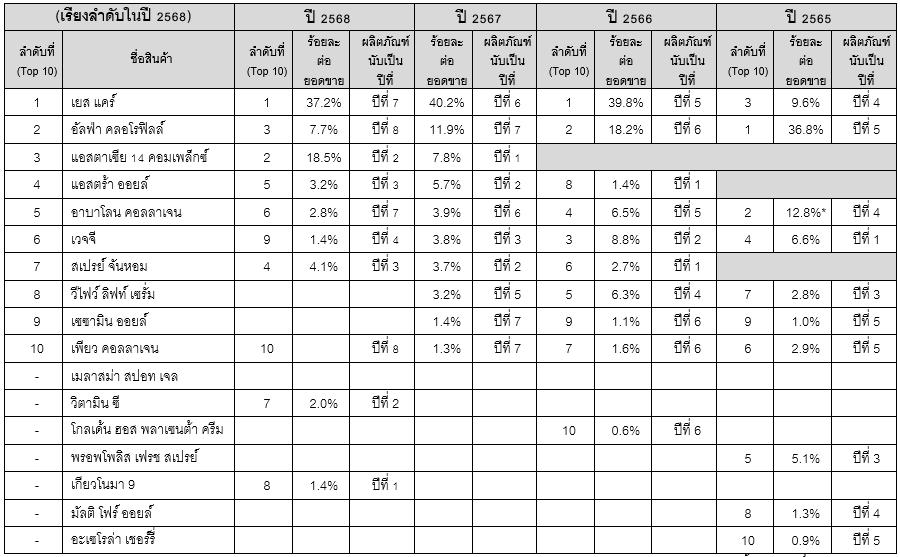
Risks to Securities Holders' Investment
Risk Register
| Risk Name | Risk Characteristics | Consequences | Management Measures | Related Risk Factors |
|---|---|---|---|---|
| Risk from the major shareholder's power to determine management policies. | Currently, Mr. Parkin Kittiparnuwat, the founder and Chief Executive Officer of the company, is the major shareholder, holding 70.75% of the paid-up capital. Although his shareholding proportion will decrease to 49.99% of the paid-up capital after the public offering, he will remain the largest shareholder of the company and will still be able to determine management policies. Mr. Parkin Kittiparnuwat will also be able to veto resolutions of the shareholders' meeting that, by law or the company's articles of association, require a three-fourths majority vote of the total votes of shareholders attending and eligible to vote, such as capital increases, capital reductions, or the sale or transfer of part or all of the business. | Mr. Parkin Kittiparnuwat, the company's largest shareholder, can determine management policies and object to resolutions of the shareholders' meeting that, by law or the company's articles of association, require a 3/4 majority vote of the total votes of shareholders attending the meeting and having the right to vote, such as a capital increase, capital decrease, or the sale or transfer of part or all of the business. | The company has appointed 3 independent directors out of a total of 9 directors to participate in board meetings, serving to scrutinize and provide checks and balances on the company's executive management. These individuals possess expertise in accounting and finance, legal matters, and medical fields, and are also responsible for considering and approving various items before presenting them to the shareholders' meeting. This measure is implemented to assure shareholders that the company's internal management will be conducted transparently and for the benefit of the company. | 769 · Other name: Risk from major shareholders having the power to determine management policies. · Description: Other · Info category: HOLDER_RISK |
| Risk of existing shareholders of the company potentially selling their shares in the future. | After the company's shares have been listed on the stock exchange for a period of 6 months, 25.00% of the company's shares that are subject to a silent period (lock-up period) will be unlocked and become tradable in accordance with relevant regulations. The remaining 75.00% of the shares will remain subject to the lock-up period until the completion of 12 months. Although the company's major shareholders have a policy and intention to hold shares for the long term to jointly manage and continuously foster business growth, the company must still disclose potential risks that may arise if a significant number of shares are sold in the future by existing shareholders or upon the expiration of the aforementioned lock-up period. | may affect the trading price of shares on the Stock Exchange, whereby the Company cannot definitively predict or guarantee the impact (if any) on the share price at that specific time. | 769 · Other name: Risk of existing shareholders of the company potentially selling their shares in the future. · Description: Other · Info category: HOLDER_RISK |
Foreign Investment Risk
Introduction
None