
Sustainability · 2025
In this section50 topics
- Sustainability Policy3 items
- Sustainability Goals & UN SDGs3 items
- Policy Review2 items
- Business Value Chain1 item
- Stakeholder Analysis2 items
- Environmental Sustainability — Overview1 item
- Environmental Policy & Guidelines3 items
- Environmental Policy Review1 item
- Energy — Plan & Guidelines1 item
- Energy — Electricity Consumption1 item
- Energy — Fuel Consumption1 item
- Energy — Targets1 item
- Energy — Performance & Outcomes1 item
- Water — Plan & Guidelines1 item
- Water — Withdrawal, Discharge & Consumption1 item
- Water — Targets1 item
- Water — Performance & Outcomes1 item
- Waste — Plan & Guidelines2 items
- Waste — Generation, Disposal & Recycling1 item
- Waste — Targets1 item
- Waste — Performance & Outcomes1 item
- GHG — Plan & Guidelines2 items
- GHG — Emissions1 item
- GHG — Emissions Verification1 item
- GHG — Principles & Standards1 item
- GHG — Targets1 item
- GHG — Performance & Outcomes1 item
- Environmental Legal Incidents1 item
- Social Sustainability — Overview1 item
- Social Policy & Guidelines3 items
- Social Policy Review1 item
- Social — Principles & Standards Practised1 item
- Human Rights Due Diligence1 item
- Employees — Plan & Guidelines3 items
- Employees — Workforce1 item
- Employees — Remuneration & Provident Fund1 item
- Employees — Training & Development1 item
- Employees — Occupational Health & Safety1 item
- Employees — Labour Relations1 item
- Employees — Employee Representation3 items
- Employees — Targets1 item
- Employees — Performance & Outcomes2 items
- Customers — Plan & Guidelines3 items
- Customers — Satisfaction Results1 item
- Customers — Targets1 item
- Customers — Performance & Outcomes2 items
- Community & Social — Plan & Guidelines3 items
- Community & Social — Targets1 item
- Community & Social — Performance & Outcomes2 items
- Law Violation Incidents1 item
Sustainability Policy
Introduction
|
Nutrition ProFess Public Company Limited ("the Company") prioritizes conducting business and fostering sustainable growth, taking into account economic, environmental, and social impacts, under good corporate governance, ethical conduct, and consideration for all relevant stakeholders throughout the business value chain. Therefore, the Company has established policies and operational guidelines for sustainable development, in line with the sustainable development goals of Thailand and the United Nations. |
|
|
(UN Sustainable Development Goals: SDG), as well as other related commitments, with concrete sustainability indicators (Environmental, Social, and Governance: ESG Metrics) as recommended by the Stock Exchange of Thailand. Furthermore, the Company ensures transparent, high-quality, and standardized disclosure and reporting of sustainability information in the 56-1 One Report, serving as decision-making data for investors, which will enhance stakeholder confidence in the Company's long-term business potential, leading to stable and sustainable growth for the Company's business. |
|
Has a Sustainability Policy
Yes
Policy Description
The company aims to create a balance in its business operations by considering the value and impacts across economic, social, and environmental dimensions throughout the business value chain, and by transferring knowledge gained from business operations to all stakeholder groups. The company has a good corporate governance manual and a business ethics code for management, covering matters such as the no-gift policy and anti-corruption. There are complaint channels for unfair practices to allow all employees access to the Board of Directors, the Chairman of the Board, and the Audit Committee (AC) when they perceive unfair management systems or situations within the company. Therefore, the company has established policies and guidelines covering various key aspects as follows:
|
Topic |
Policy |
Guidelines |
|
The company will conduct business in accordance with ethical business principles, foster a strong culture of corporate governance and risk management within the framework of business ethics, and support compliance with laws, regulations, procedures, international standards, and anti-corruption guidelines, including transparent and auditable operations. |
|
|
The company focuses on long-term performance, with business objectives in 3 areas:
|
|
|
The company conducts business with consideration for environmental impacts, effectively responding to business opportunities and challenges arising from environmental factors such as climate change and limited natural resources. This includes supporting and promoting the efficient and valuable use of resources, as well as fostering environmentally friendly business operations and environmental activities. |
|
|
The company conducts business with responsibility towards all stakeholder groups and society as a whole. It prioritizes human resource development both within and outside the company, supporting employees in developing their potential and career advancement. It also supports knowledge and various activities in communities to enhance the quality of life, operating with the aim of enabling the industry to coexist harmoniously with communities and society, and collectively improving the quality of society. |
|
|
The company prioritizes consumer health and hygiene, from formula development to the production process. Every product leaving the company must be safe and not detrimental to consumer health. |
Conduct rigorous product safety testing, both for raw materials and finished products, to ensure the absence of contaminants or substances harmful to health. |
Occupational health and working environment |
The company prioritizes safety. Occupational health and working environment: Develop and support employees' knowledge of safety, organize operations and workplaces to ensure a safe and healthy working environment, prevent hazards and reduce occupational risks, comply with relevant regulations and laws, and regularly improve safety, occupational health, and working environment. |
Occupational health, safety, and quality of life for all employees, as well as all stakeholder groups, in accordance with international standards for occupational health and safety management. This includes requiring employees to comply with laws and regulations concerning safety, occupational health, and the working environment.
|
|
The company prioritizes human rights, striving to conduct business ethically by demonstrating respect for human rights, including the dignity of individuals, fair treatment, and promoting a good quality of life, which will lead to high-quality work performance. |
|
|
The company is committed to promoting innovation in developing the best new products for customers, employees, society, and the environment, as well as improving and developing work processes through innovation. It encourages the creation of innovations and new businesses that add value to the organization, relevant stakeholders, society, and the environment, thereby generating added value and long-term growth. The company promotes the use of digital technology in service development and data analysis to expand its business. |
|
|
The company is committed to promoting risk management throughout the value chain of all businesses in all dimensions—economic, social, and environmental—to enable the company to effectively respond to rapid environmental changes, both current and future challenges, and to achieve stable and sustainable growth. |
|
Sustainability Goals & UN SDGs
Has Sustainability Goals
Yes
Goals Description
The company has aligned its operations with 7 of the United Nations Sustainable Development Goals, covering economic, social, and environmental dimensions, as follows:
|
SDG Goals |
Stakeholders |
Key Sustainability Issues |
||
|
Economic Dimension |
Social Dimension |
Environmental Dimension |
||
|
Goal 1: Good Health and Well-being |
Employees Partners Community |
|
||
|
Goal 2: Quality Education |
Employees Customers Partners |
|
|
|
|
Goal 3: Decent Work and Economic Growth |
Employees Customers Partners Shareholders |
|
|
|
|
Goal 4: Industry, Innovation, and Infrastructure |
Employees Customers Partners |
|
||
|
Goal 5: Sustainable Cities and Communities |
Employees Customers Partners Community |
|
|
|
|
Goal 6: Responsible Consumption and Production |
Employees Customers Partners Community |
Development of tools to assist in post-sales tracking to encourage repeat purchases. |
Continuous Health Education |
|
|
Goal 7: Partnerships for the Goals |
Partners Community Shareholders |
|
|
|
UN Sustainable Development Goals
| SDG Goal |
|---|
| Goal 3 Good Health and Well-being |
| Goal 4 Quality Education |
| Goal 5 Gender Equality |
| Goal 6 Clean Water and Sanitation |
| Goal 7 Affordable and Clean Energy |
| Goal 8 Decent Work and Economic Growth |
| Goal 9 Industry, Innovation and Infrastructure |
| Goal 10 Reduce Inequalities |
| Goal 11 Sustainable Cities and Communities |
| Goal 12 Responsible Consumption and Production |
| Goal 13 Climate Action |
| Goal 16 Peace, Justice and Strong Institutions |
| Goal 17 Partnerships for the Goals |
Policy Review
Policy Reviewed This Year
No
Policy Changed This Year
No
Business Value Chain
Value Chain Description
The company recognizes the utmost importance of engaging with stakeholders and managing the sustainability of all activities within its business value chain. This is achieved by analyzing various activities throughout the service process, encompassing economic, social, and environmental dimensions, from the selection and sourcing of potential and responsible business partners under good corporate governance frameworks. This approach aims to meet the needs and expectations of all stakeholder groups, create a balance between value and worth from business operations for all stakeholders, and foster strong relationships and trust in the company's operations with its stakeholders.
Primary Activities
The company recognizes that supply chain management is the heart of its business operations. The company prioritizes and acknowledges stakeholders throughout the business value chain in key primary activities, which include: 1) Product Development, 2) Raw Material and Packaging Sourcing, 3) Production, 4) Storage and Delivery, 5) Marketing and Sales, and 6) Customer Relations. The guidelines for managing the business value chain across these six primary activities are as follows:
|
Business Value Chain |
Operational Guidelines |
(New Product) |
|
|
|
|
|
|
|
|
|
|
|
Support Activities
The company's support activities include human resource management, development, and support. The company has a policy for human resource development and management to demonstrate its commitment to human capital. The company focuses on developing employees' skills and potential while promoting their participation in organizational development to foster continuous progress and enhance work efficiency at all levels.
Internal Learning and Development: The company mandates that supervisors in each department are responsible for coaching, training, and imparting knowledge and various skills to employees within their respective departments. This ensures that employees acquire the knowledge, understanding, and skills necessary for their work. Furthermore, the company has established annual performance evaluations for employees at all levels.
External Knowledge Development: To promote and implement, the company organizes external seminars and training sessions to enhance knowledge and exchange external experiences. The company has mandated continuous seminars and training for its personnel at all levels, from operational staff to executives, to develop their knowledge, capabilities, and work potential, and to apply the acquired knowledge to improve the company's operations.
Annually, the management of each department conducts an assessment of the company's personnel development needs and requirements at all levels, from executives to operational staff. This individual assessment analyzes the skills requiring further development and necessary training for additional work, and it forms the basis for the company's human resource development plan. This plan aligns with the company's development strategy and individual potential development guidelines, preparing employees for increased responsibilities, career advancement, and the ability to fill future vacant positions. Details are as follows:
|
Training hours |
Year 2022 |
Year 2023 |
Year 2024 |
Year 2025 |
|
Total training hours (hours) |
1,962 |
3,540 |
3,630 |
3,876 |
|
Average training hours per person (hours/person) |
8.92 |
10.41 |
10.20 |
6.00 |
Stakeholder Analysis
Introduction
To ensure successful business operations and alignment with the Company's mission, efforts have been made to understand and ascertain the needs and expectations of stakeholders, and to effectively meet these needs and create satisfaction among them.
The Company has categorized its stakeholders into 8 groups: shareholders or investors, employees, customers, business competitors, business partners or allies, creditors or financial institutions, communities, society and the environment, and regulatory bodies. This classification is based on their relevance to the Company's operations, the sustainability impact of stakeholders on the Company, and the impact of the Company's business operations on these stakeholder groups, in conjunction with the Company's goals, strategic direction, global sustainable development trends and goals, and established approaches to address key issues.
Stakeholder Analysis
| Stakeholder Type | Stakeholders | Stakeholder Expectations | Response to Expectations | Communication Activities |
|---|---|---|---|---|
| Internal stakeholders | 2904 · Description: Investors or investment institutions · 2913 · Description: Shareholders | Risk Management; Continuous Business Growth; Good Corporate Governance; Business Sustainability | Transparency and accountability in business management, including anti-corruption and bribery. Implementation of risk assessment at the organizational and operational levels. Providing consistent and tangible returns on investment. Business management under the framework of sustainable development in economic, social, and environmental aspects. | 2944 · Description: Annual General Meeting (AGM) · 2949 · Other name: Responding to inquiries via telephone and email through Investor Relations · Description: Others |
| Internal stakeholders | 2921 · Description: Employees | • Receive appropriate welfare and compensation • Receive training and development of knowledge and work skills • Opportunities for career growth and advancement • Opportunities to participate and express opinions appropriately • Safe and suitable working environment | Provide appropriate compensation and benefits comparable to other companies in the same industry. Implement succession planning to provide employees with opportunities for career growth. Organize training and development programs for employees based on their roles, utilizing both internal and external trainers. Consider employee feedback from annual evaluations for improvement. Regularly communicate workplace safety information. | 2942 · Description: Internal Meeting · 2949 · Other name: Management-Employee Meeting · Description: Others · 2949 · Other name: Annual Performance Review · Description: Others |
| External stakeholders | 2923 · Description: Customers | Contacting customers via telephone, online, and through offline visits for certain channels. Closely coordinating with customers at every stage, especially if there are product issues or customers require further information. Surveying customer satisfaction. Offering opportunities for customers to visit the production process. Engaging in activities with customers. | • Deliver quality products on time and according to specified standards • Receive accurate information about products and services • Product prices are reasonable • Our competition is transparent • Able to resolve issues as quickly as possible • Maintain customer confidentiality | 2949 · Other name: Transparent, fair, and accountable corporate governance · Description: Others · 2949 · Other name: Has an anti-corruption policy · Description: Others · 2949 · Other name: Quality management with international standards · Description: Others · 2949 · Other name: Maintains ethical conduct in client confidentiality. · Description: Others · 2949 · Other name: Invite customers to visit the production process. · Description: Others · 2949 · Other name: Develop high-quality products that meet customer needs. · Description: Others · 2949 · Other name: Feedback and Complaint Handling · Description: Others |
| External stakeholders | 2898 · Description: Competitors | Procurement of goods • Utilization of services from business partners • Fair, just, and equitable competition • Compliance with relevant laws, regulations, and rules • Assessment of business partner satisfaction | • Compliance with company procurement regulations and requirements • Conducting business fairly and transparently, without interfering with competitors' businesses • Conducting business ethically and with professional integrity • Maintaining the confidentiality of partner information | 2949 · Other name: Whistleblowing and Complaints · Description: Others · 2949 · Other name: Guidelines for Good Corporate Governance and Ethical Principles and Code of Conduct in Business Operations · Description: Others · 2949 · Other name: Maintains ethical conduct in preserving the confidentiality of business partners. · Description: Others |
| External stakeholders | 2900 · Description: Business partners | • Conducting business with integrity, ethics, and professional conduct • Adherence to commercial agreements and contracts • Maintaining mutual business interests • Timely payment according to agreed schedules | Transparent and fair sales contracts or business cooperation agreements • Strict adherence to agreements or contracts • Promoting and developing the potential of the company and its partners or business allies for mutual growth • Avoiding default by making payments on time | 2941 · Description: Online Communication · 2943 · Description: External Meeting · 2948 · Description: Training / Seminar |
| External stakeholders | 2894 · Description: Creditor · 2925 · Description: Financial institution | • Disclose financial and accounting information accurately • Repay both interest and principal of loans according to the schedule specified in the contract • Financial risk management | • Provide accurate and reliable financial and accounting information. • Adhere to the terms and conditions of loan agreements, with stringent guidelines and practices. • Implement financial risk management by relevant departments, establish a risk management working group, and report to the Audit Committee and the Board of Directors for their acknowledgment. | 2941 · Description: Online Communication · 2943 · Description: External Meeting |
| External stakeholders | 2902 · Description: Community · 2928 · Description: Society · 2936 · Other name: Environment · Description: Others | • Consider the impacts on communities, society, and the environment where the company is located or involved. • Promote the reduction of impacts on communities, society, and the environment. • Listen to suggestions and opinions from communities, society, and environmental stakeholders. • Adhere to human rights principles. | • Support activities that will help improve the quality of life for the community, society, and environment • Establish measures, including reducing impacts on the community, society, and environment • Establish a unit to receive suggestions and complaints from the community and society | 2940 · Description: Social Event · 2941 · Description: Online Communication · 2949 · Other name: Participation in community and social development · Description: Others |
| External stakeholders | 2931 · Description: Government agencies and Regulators | • Compliance with relevant laws, announcements, regulations, rules, and various provisions • Conducting business based on ethics, morality, and good corporate governance • Supporting government policies and duties • Organizational development towards sustainability | • Conduct business within the framework of relevant laws, announcements, regulations, rules, and ordinances. • Establish guidelines and policies for good corporate governance and announce them for the board of directors, executives, and employees to adhere to and follow. • Cooperate and comply with various government activities. • Develop guidelines for sustainable organizational development. | 2940 · Description: Social Event · 2941 · Description: Online Communication · 2945 · Description: Complaint Reception · 2949 · Other name: Collaboration with government agencies in organizing various activities. · Description: Others |
Environmental Sustainability — Overview
Operating Results — Introduction
Environmental Operations
Recognizing the importance of environmental protection and managing various pollution issues that may arise from the company's operations, the company has established the following guidelines:
1. Efficient Resource Utilization
Electricity Management: As electricity is a crucial resource for business operations, the company has implemented energy-saving measures, including maintaining air conditioners according to manufacturer standards, a lights-off project during breaks or in unused areas, selecting electrical appliances with Energy Label No. 5, and installing solar-powered lighting outside the building.
Reducing Paper Usage and Recycling: The company reduces paper usage by promoting double-sided printing and the use of electronic files, with the goal of minimizing paper consumption.
Fuel Consumption: The company provides employee shuttle services to reduce carbon dioxide emissions, as well as lunch benefits for employees to reduce plastic waste, and uses water in appropriate quantities for various related activities.
Furthermore, a Facilities Department has been established to inspect utility systems, such as electrical appliances and water supply systems, to ensure the company's efficient energy usage.
2. Waste Disposal
The company segregates waste, refuse, and collects them for disposal by engaging external service providers. The company adheres to standards specified by relevant laws. Furthermore, the company prioritizes the most efficient management of natural resources by contracting Akkee Prakan Public Company Limited for the destruction of substandard products and packaging. This company is capable of disposing of industrial waste in liquid, sludge, solid, and infectious forms in a scientifically sound, safe, and environmentally friendly manner using modern technological mechanisms.
3. Management for Reducing Greenhouse Gas Issues
The company recognizes and is committed to reducing greenhouse gas emissions and fully cooperates, promotes, and supports various activities that help mitigate global warming. This is for the verification and certification of the organization's carbon footprint at a Limited Assurance Level by the Thailand Greenhouse Gas Management Organization (Public Organization). In 2023, the company began collecting its greenhouse gas emission data to serve as a baseline for setting reduction targets in 2024. In March 2025, the company scheduled the verification of its greenhouse gas emissions for 2024. The company has established a carbon footprint policy as follows:
-
Promoting, supporting, raising awareness, and enhancing understanding of efficient energy conservation and management, as well as climate change, among personnel at all levels to build confidence for the group of companies, shareholders, stakeholders, and business partners.
-
Collecting relevant greenhouse gas emission data from organizational activities to assess greenhouse gas emissions and removals.
-
Implementing activities that reduce the impact of greenhouse gas emissions and planting trees to enhance biodiversity as carbon sinks.
-
Promoting and campaigning for the collection and management of waste for recycling.
-
Additionally, the company received the Green Industry Award, Level 2 Green Activity, from the Ministry of Industry, for its activities aimed at reducing environmental impact, issued on December 26, 2024.
Environmental Policy & Guidelines
Has an Environmental Policy
Yes
Policy Description
The company recognizes the importance of the environment and is committed to reducing environmental impacts, as well as continuously improving and developing its environmental management system, with responsibility towards the community and society as a whole. The details of implementation are as follows:
-
Strictly comply with laws and other regulations related to the company's operational activities.
-
Focus on waste management by appropriate collection, segregation, and disposal, and improve the company's environment to prepare for emergency response.
-
Protect the environment by focusing on preventing pollution resulting from the company's operational activities, both direct and indirect.
-
Promote and support employees in developing environmental awareness, reducing the efficient use of resources, energy, and consumables. Environmental management communication will be disseminated to all employees, including contractors and relevant external agencies.
-
The company will cooperate and promote safety activities, including environmental conservation, with stakeholders, and support the procurement of environmentally friendly products and services.
-
Monitor and review established objectives appropriately and effectively to ensure continuous improvement of the environmental management system.
Environmental Guidelines
| Guideline |
|---|
| Waste Management |
| Greenhouse Gas and Climate Change Management |
Environmental Policy Review
Policy Reviewed This Year
No
Energy — Plan & Guidelines
Has an Energy Management Plan
No
Energy — Electricity Consumption
Electricity Consumption
| Metric |
|---|
| Total electricity consumption within the organization (Kilowatt-Hours) |
| Electricity purchased for consumption from non-renewable energy sources (Kilowatt-Hours) |
| Electricity purchased or generated for consumption from renewable energy sources (Kilowatt-Hours) |
Energy — Fuel Consumption
Fuel Consumption
| Metric |
|---|
| Crude oil (Barrels) |
| Coal (Metric tonnes) |
| Jet fuel (Litres) |
| Diesel (Litres) |
| Gasoline (Litres) |
| Fuel oil (Litres) |
| Natural gas (Standard cubic feet) |
| LPG (Kilograms) |
| Steam (Metric tonnes) |
Energy — Targets
Has Set Targets
No
Energy — Performance & Outcomes
Has Performance Results
No
Water — Plan & Guidelines
Has a Water Management Plan
No
Water — Withdrawal, Discharge & Consumption
Water Withdrawal, Discharge & Consumption
| Metric |
|---|
| Total water withdrawal (Cubic meters) |
| Total water withdrawal by third-party water (Cubic meters) |
| Total water withdrawal by surface water (Cubic meters) |
| Total water withdrawal by groundwater (Cubic meters) |
| Total water withdrawal by seawater (Cubic meters) |
| Total water withdrawal by produced water (Cubic meters) |
| Percentage of wastewater treated before discharge (%) |
| Total water discharge (Cubic meters) |
| Total water discharge to third-party water (Cubic meters) |
| Total water discharge to surface water (Cubic meters) |
| Total water discharge to groundwater (Cubic meters) |
| Total water discharge to seawater (Cubic meters) |
| Total water consumption (Cubic meters) |
| Recycled water (Cubic meters) |
Water — Targets
Has Set Targets
No
Water — Performance & Outcomes
Has Performance Results
No
Waste — Plan & Guidelines
Has a Waste Management Plan
Yes
Plan Description
Waste Disposal
The Company separates waste and refuse, collecting them for disposal by engaging external service providers. The Company adheres to the standards stipulated by relevant laws. Furthermore, the Company prioritizes the most efficient management of natural resources. This includes engaging Akkee Prakarn Public Company Limited for the destruction of substandard products and packaging. Said company possesses the capability to dispose of industrial waste in liquid, sludge, solid, and infectious forms, ensuring compliance with academic principles, safety through modern technological mechanisms, and environmental friendliness and safety.
Waste — Generation, Disposal & Recycling
Waste Generation, Disposal & Recycling
| Metric |
|---|
| Total waste generated (Kilograms) |
| Non-hazardous waste (Kilograms) |
| Non-hazardous waste - Landfilling (Kilograms) |
| Non-hazardous waste - Incineration (with energy recovery) (Kilograms) |
| Non-hazardous waste - Incineration (without energy recovery) (Kilograms) |
| Non-hazardous waste - Other disposal operations (Kilograms) |
| Hazardous waste (Kilograms) |
| Hazardous waste - Landfilling (Kilograms) |
| Hazardous waste - Incineration (with energy recovery) (Kilograms) |
| Hazardous waste - Incineration (without energy recovery) (Kilograms) |
| Hazardous waste - Other disposal operations (Kilograms) |
| Total reused/recycled waste (Kilograms) |
| Reused/Recycled non-hazardous waste (Kilograms) |
| Reused non-hazardous waste (Kilograms) |
| Recycled non-hazardous waste (Kilograms) |
| Reused/Recycled hazardous waste (Kilograms) |
| Reused hazardous waste (Kilograms) |
| Recycled hazardous waste (Kilograms) |
Waste — Targets
Has Set Targets
No
Waste — Performance & Outcomes
Has Performance Results
No
GHG — Plan & Guidelines
Has a GHG Management Plan
Yes
Plan Description
Management for Reducing Greenhouse Gas Problems
The company recognizes and is committed to reducing greenhouse gas emissions, and fully cooperates, promotes, and supports various activities that help mitigate global warming, for the verification and certification of the organization's carbon footprint at a Limited Assurance Level from the Thailand Greenhouse Gas Management Organization (Public Organization). In 2023, the company began collecting its greenhouse gas emission data to use as a baseline for setting targets to reduce greenhouse gas emissions in 2024, and the company has established a carbon footprint policy as follows:
-
Promote, support, raise awareness, and enhance understanding of efficient energy conservation and management, as well as climate change, among personnel at all levels to build confidence for the group of companies, shareholders, stakeholders, and business partners.
-
Collect relevant greenhouse gas emission data from the organization's activities to assess greenhouse gas emissions and removals.
-
Implement activities that reduce the impact of greenhouse gas emissions and plant trees to enhance biodiversity as carbon sinks.
-
Promote and campaign for the collection and management of waste for recycling.
Furthermore, the company has also joined the Thailand Carbon Neutral Network with the Thailand Greenhouse Gas Management Organization (Public Organization).
GHG — Emissions
GHG Emissions
| Metric |
|---|
| Total GHG emissions (Metric tonnes of carbon dioxide equivalent) |
| Total greenhouse gas emissions 1 (Metric tonnes of carbon dioxide equivalent) |
| Total greenhouse gas emissions 2 (Metric tonnes of carbon dioxide equivalent) |
| Total greenhouse gas emissions 3 (Metric tonnes of carbon dioxide equivalent) |
GHG — Emissions Verification
Emissions Verified by a Third Party
No
GHG — Principles & Standards
Principles & Standards Applied
| Standard |
|---|
| 2671 |
GHG — Targets
Has Set GHG Targets
No
GHG — Performance & Outcomes
Has Performance Results
No
Environmental Legal Incidents
Legal Violation Incidents
| Metric | Current Year | Previous Year | Two Years Ago |
|---|---|---|---|
| Number of cases or incidents of legal violations or negative environmental impact (cases) | 0 | 0 | 0 |
Social Sustainability — Overview
Operating Results — Introduction
The company recognizes and is aware of its role and duty as a good member of society by complying with relevant laws and regulations, as well as providing support, cooperation, assistance, and volunteering for activities beneficial to the community and surrounding society. Examples of activities the company has undertaken in the past are as follows:
-
Enlightened Eyes Project with Yes Care Donating a portion of income to the People's Eye Protection Foundation.

-
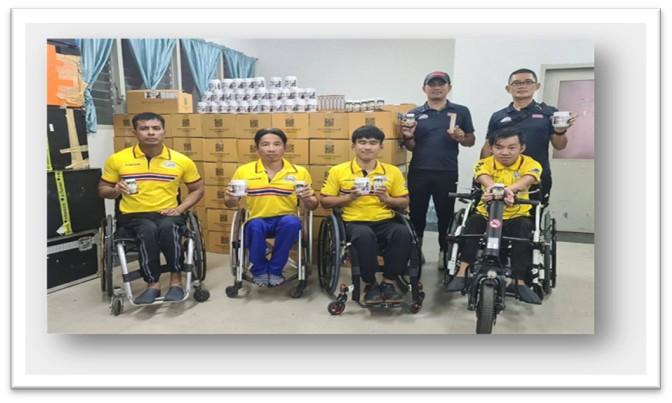
Project to support the Thai national para-cycling team in preparation for the ASEAN Para Games 2023 and the Paralympic Games 2024 with products “ Whey Pro” from the company.
-
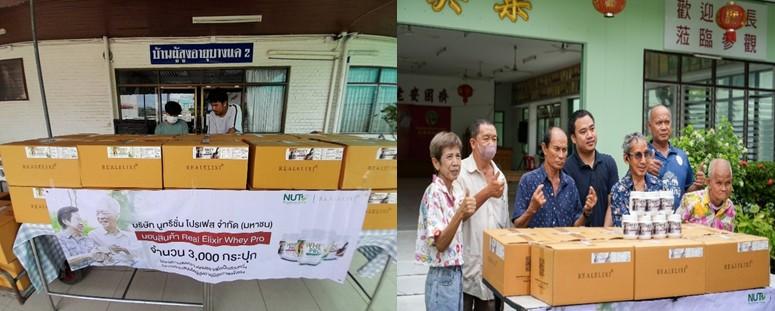
Project to donate RealElixi Whey Pro products to Baan Bang Khae Elderly Home to support the health of the elderly.
-
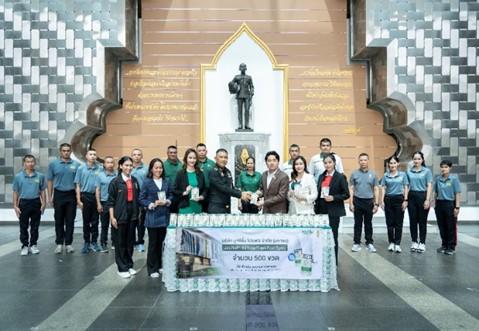
Hygiene project with the company's Junhom Fresh Foot Spray product, to be part of supporting foot odor hygiene for the Royal Thai Army Command and General Staff College.
-
Tea sipping project to heal hearts and gain knowledge for the treatment of children with congenital heart disease at the Children's Heart Foundation.
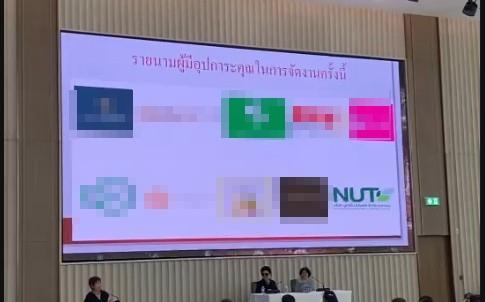
The company has no cases of violating environmental or social laws or regulations, nor has it been accused of creating negative impacts on environmental and social issues. Furthermore, the company has had no significant labor disputes in the past three years.
Employees — Plan & Guidelines
Has an Employee Management Plan
Yes
Plan Description
Fair treatment of employees is a crucial component that the company adheres to and considers as a business ethic. The company has specific guidelines for employees to ensure that there is no discrimination and that all employees receive equal opportunities. The operational guidelines are as follows:
-
Receive appropriate welfare and compensation
-
Receive training and develop knowledge and skills for work
-
Opportunities for growth and career advancement
-
Provide opportunities for appropriate participation and expression of opinions
-
A safe and suitable working environment
Plan Areas
| Plan Area |
|---|
| Fair employee compensation |
| Employee training and development |
| Promoting employee relations and participation |
| Migrant/foreign labor |
| Occupational health and safety in workplace |
Employees — Workforce
Workforce Data
| Metric | Current Year | Previous Year | Two Years Ago |
|---|---|---|---|
| Total number of employees (Persons) | 876 | 979 | 921 |
| Number of male employees (Persons) | 246 | 263 | 268 |
| Number of female employees (Persons) | 630 | 716 | 653 |
| Total employment of disabled persons (people) | 8 | 10 | 7 |
| Total disabled employees (people) | 8 | 10 | 7 |
| Total male disabled employees (people) | 4 | 5 | 4 |
| Total female disabled employees (people) | 4 | 5 | 3 |
| Total disabled workers who are non-employee (people) | 0 | 0 | 0 |
| Contributions to the fund for promoting and improving the quality of life for disabled persons | 1 | 1 | 1 |
| Total number of male employees in operational level (Persons) | 241 | 258 | 264 |
| Total number of male employees in management level (Persons) | 0 | 0 | 0 |
| Total number of male employees in executive level (Persons) | 5 | 5 | 4 |
| Total number of female employees in operational level (Persons) | 628 | 714 | 652 |
| Total number of female employees in management level (Persons) | 0 | 0 | 0 |
| Total number of female employees in executive level (Persons) | 2 | 2 | 1 |
Employees — Remuneration & Provident Fund
Remuneration & Provident Fund
| Metric | Current Year | Previous Year | Two Years Ago |
|---|---|---|---|
| Total disabled employees (people) | 267,003,734.25 | 272,626,871.3 | 252,033,660.21 |
| Total male employee remuneration (Baht) | 93,385,545.3 | 97,177,234.71 | 99,612,099.74 |
| Total female employee remuneration (Baht) | 173,618,188.95 | 175,449,636.59 | 152,421,560.47 |
| Number of employees eligible to participate in PVD (persons) | 851 | 949 | 898 |
| Total number of employees joining employee provident fund (Persons) | 290 | 267 | 232 |
| Percentage of total number of employees joining employee provident fund to total number of employees (%) | 33.11 | 27.27 | 25.19 |
| Number of PVD members / Total eligible employees (%) | 34.08 | 28.13 | 25.84 |
| Total amount of provident fund contributed by the Company (Baht) | 2,323,577.27 | 1,748,438 | 1,479,408.96 |
| Total amount of provident fund contributed by employee (baht) | 2,323 | 1,748,438 | 1,479,408.96 |
Employees — Training & Development
Training Data
| Metric | Current Year | Previous Year | Two Years Ago |
|---|---|---|---|
| Average employee training hours (Hours / Person / Year) | 6 | 10.2 | 10.41 |
| Employee development and training expenses (baht) | 435,782.19 | 720,452.25 | 317,250.23 |
Employees — Occupational Health & Safety
Occupational Health & Safety Data
| Metric | Current Year | Previous Year | Two Years Ago |
|---|---|---|---|
| Total number of lost time injury incidents by employees (Cases) | 2 | 2 | 3 |
Employees — Labour Relations
Labour Relations Data
| Metric | Current Year | Previous Year | Two Years Ago |
|---|---|---|---|
| Total voluntary resignations (Persons) | 461 | 497 | 565 |
| Male employees who voluntary resigned (Persons) | 108 | 131 | 154 |
| Female employees who voluntary resigned (Persons) | 353 | 366 | 411 |
| Percentage of employee turnover leaving the Company voluntarily (%) | 52.63 | 50.77 | 61.35 |
| Evaluation result of employee engagement | 1 | 1 | 1 |
Employees — Employee Representation
Introduction
The company has established a welfare committee in the establishment in accordance with Section 96 of the Labor Protection Act B.E. 2541, with the appointed individuals having the following duties:
-
Consult with the employer to arrange welfare for employees.
-
Provide consultation and recommendations to the employer regarding the provision of welfare for employees.
-
Inspect, control, and supervise the welfare provided by the employer to employees.
-
Propose opinions and guidelines for providing beneficial welfare for employees to the Labor Welfare Committee.
Employees Are Represented Collectively
Yes
Forms of Representation
| Form |
|---|
| Welfare committee |
Employees — Targets
Has Set Employee Targets
No
Employees — Performance & Outcomes
Has Performance Results
Yes
Performance Description
The company treats all employees equally and fairly, ensuring their well-being, safety, and hygiene in the workplace, as well as promoting organizational learning and personnel development to enhance employees' professional performance, develop work systems, and foster innovation within the organization. Supporting activities include:
The company's supporting activities include human resource management, development, and support. The company has a policy for personnel development and management to demonstrate its commitment to human resources. The company focuses on developing employees' skills and potential while promoting their participation in organizational development to ensure continuous progress and increased work efficiency for employees at all levels in all aspects.
Internal Organizational Learning Development: The company mandates that supervisors in each department are responsible for coaching, training, and imparting knowledge and various skills to employees in their respective departments, to ensure employees acquire knowledge, understanding, and operational skills. The company also requires annual performance evaluations for employees at all levels.
External Knowledge Development: To promote and implement external seminars and training, thereby enhancing knowledge and exchanging external experiences, the company has mandated continuous seminars and training for its personnel at all levels, from operational staff to executives. This aims to develop their knowledge, abilities, and work potential, and to apply the knowledge gained from training to improve the company's operations.
Annually, the management of each department conducts an assessment of the company's personnel development needs and requirements at all levels, from executives to operational staff. This individual assessment analyzes the skills that require further development and training essential for additional duties and forms the basis of the company's human resource development plan. This plan aligns with the company's development strategy and individual personnel potential development guidelines, preparing employees for increased responsibilities, career advancement, and the ability to fill future vacant positions.
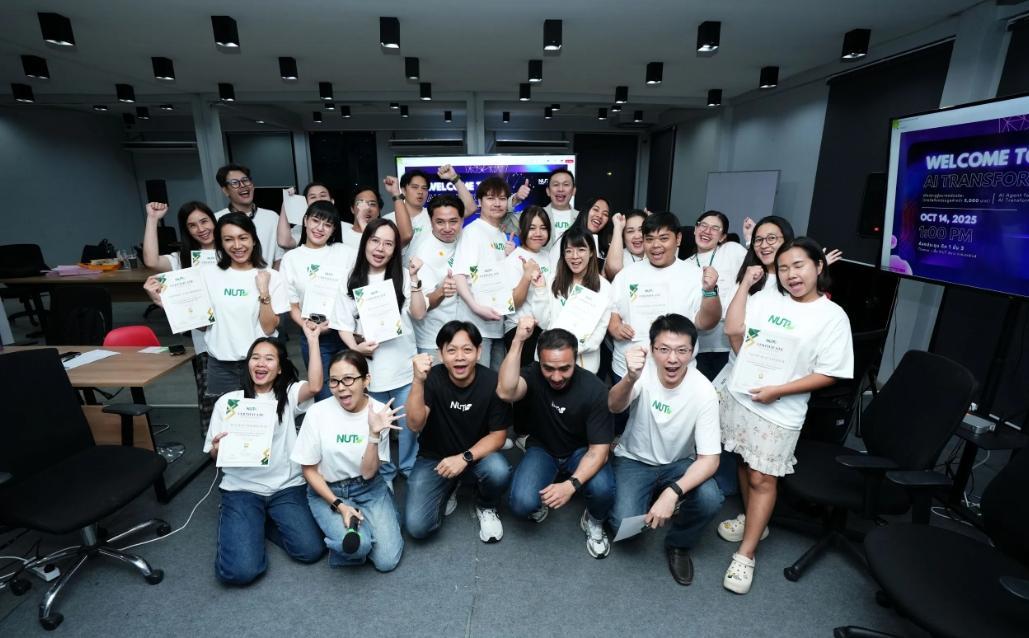
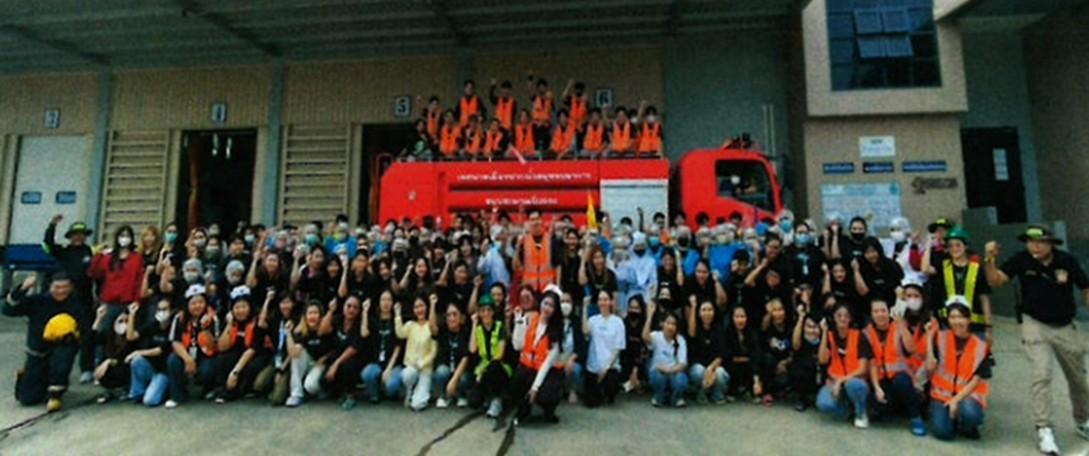
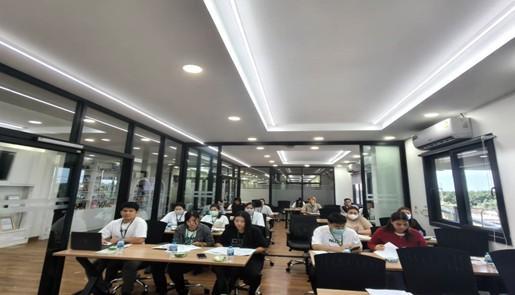
In 2025, the company organized a total of 3,876 hours of training, both external and internal, averaging 6 hours per person (this figure does not include on-the-job training hours). Examples of courses conducted in 2025 include:
In-depth PDPA Standard Course for Organizations
Course on Halal Development for the ASEAN Free Trade Market
Course on Enhancing Leadership Skills with Emotional Intelligence
Leadership Skill Development Course (Smart Leader)
Course on Efficient Production Planning and Control
Firefighting Training and Fire Evacuation Drill Course for Head Office, Nirvana, TIP9, Sap Rung Rueang
Course for the Safety, Occupational Health, and Working Environment Committee
FSSC 22000 Version 6 Requirements and Implementation
Kaizen Course for Productivity Enhancement and Continuous Improvement
AI Transformation for Executive & Strategic Course
Basic IT-Related Corruption Course
Course on Error Analysis and Problem Solving to Improve Accounting Quality
AI Agent for Executive & Strategic AI Transformation Course, etc.
Customers — Plan & Guidelines
Has a Customer Management Plan
Yes
Plan Description
The company is committed to developing comprehensive products and services that are of high quality and standard, offered at appropriate prices. It diligently and consistently maintains customer confidentiality, continuously seeks ways to add value for customers, and strictly adheres to all customer-related terms and conditions, with the following operational guidelines:
Production and Quality Control
-
Production and Quality Control Capabilities
The company possesses the capability to produce a diverse range of products, encompassing various forms, packaging, quantities, sizes, and specific ingredients. Paramount importance is placed on Quality Control at every stage, from the inspection of raw materials and packaging to the production process and the final product inspection. Furthermore, the company operates a standardized testing laboratory to analyze and certify product quality, ensuring that all goods meet complete standards before reaching consumers.
-
Enhancing Efficiency with Modern Technology
The company is committed to applying modern production technology and innovation to maximize efficiency and effectiveness in its production processes. This directly results in stable and consistent product quality, building sustainable trust among business partners and consumers.
-
Safety and Data Management Standards
The company focuses on operations that comply with product formula standards and drug registration approved by the Food and Drug Administration (FDA), as well as relevant regulations, prioritizing consumer safety. Additionally, the company has a systematic production data storage and processing system to monitor performance and analyze methods for risk prevention, loss reduction, and consistent correction of production errors.
In addition to production that meets standard formulas approved by the Food and Drug Administration (FDA) and related regulations, the company also adheres to various production standards for dietary supplements and cosmetics, as follows:
|
Order |
Issuing Authority Certifications |
Standard Name : (No.) (Standard Type) |
Description |
Expiration Date |
|
1 |
bsi |
ISO 22000:2018 (no.FSMS_791727) (Factory Standard) |
Food Safety Management System Standard for Dietary Supplements (Project Thip 9 Production Plant)* |
November 28, 2026 |
|
2 |
bsi |
HACCP & GHPs (no.CDX 662388) (Factory Standard) |
Good Hygiene Practices and The Hazard Analysis and Critical Control (Basic system for food production factories (GHPs) and Hazard Analysis and Critical Control Point (HACCP)) (Thap Rung Rueang 40 Production Plant)* |
March 28, 2029 |
|
3 |
bsi |
ISO 22716:2007 (no.CGMP_809784) (Factory Standard) |
International Standard for Good Manufacturing Practices (GMP) in Cosmetic Production (Thap Rung Rueang - Cosmetics Production Plant)* |
September 5, 2027 |
|
4 |
Samut Prakan Provincial Public Health Office |
Food Production License (no.11-1-19864) (Factory Standard) |
For dietary supplements (Project Thip 9 Production Plant)* |
December 31, 2026 |
|
5 |
Samut Prakan Provincial Public Health Office |
Food Production License (no.11-1-00364) (Factory Standard) |
For dietary supplements (Thap Rung Rueang 40 Production Plant)* |
December 31, 2026 |
|
6 |
Samut Prakan Provincial Public Health Office |
Approved for production facility inspection (Factory Standard) |
For cosmetic production (Thap Rung Rueang - Cosmetics Production Plant)* |
- (Approved on April 25, 2022, with each product requiring renewal every 3 years) |
|
7 |
bsi |
HACCP&GHPs (no.CDX791728) (Factory Standard) |
Good Hygiene Practices and The Hazard Analysis and Critical Control (Basic system for food production factories (GHPs) and Hazard Analysis and Critical Control Point (HACCP)) (Project Thip 9 Production Plant)* |
November 28, 2026 |
|
8 |
The Central Islamic Council of Thailand Office |
HALAL : (no.COT.HL.P627/2565) (Product Certification Standard) |
Dietary Supplements (Project Thip 9 Production Plant)* |
January 11, 2027 (First half: 55 items) June 7, 2027 (Second half: 76 items) |
|
9 |
Samut Prakan Provincial Islamic Committee Office |
HALAL (no.SKOJ.SP.440/2565) (Factory Standard) |
Dietary Supplements (Project Thip 9 Production Plant)* |
January 11, 2027 (First half: 219 items) June 7, 2025 (Second half: 76 items) |
|
10 |
The Central Islamic Council of Thailand Office |
HALAL : COT.HL. (no.COT.HL.I160/2561) (Product Certification Standard) |
Dietary Supplements (Thap Rung Rueang 40 Production Plant)* |
June 7, 2027 (39 items) |
|
11 |
Samut Prakan Provincial Islamic Committee Office |
HALAL (no.SKOJ.SP.192/2555) (Factory Standard) |
Dietary Supplements (Thap Rung Rueang 40 Production Plant)* |
June 7, 2027 (167 items) |
|
12 |
bsi |
GMP FDA 420 (no.CDX 681929) (Factory Standard) |
Standard for Production System of Food Processing and Storage Equipment (Thap Rung Rueang 40 Production Plant)* |
October 20, 2026 |
|
13 |
bsi |
GMP FDA 420 (no.CDX 761367) (Factory Standard) |
Standard for Production System of Food Processing and Storage Equipment (Project Thip 9 Production Plant)* |
January 14, 2028 |
|
14 |
Ministry of Industry |
Factory 4
(Factory Standard) |
Factory Operating License (Thap Rung Rueang 40 Production Plant)** |
June 29, 2026 |
|
15 |
Ministry of Industry |
Factory 4
(Factory Standard) |
Factory Operating License (Project Thip 9 Production Plant)** |
May 6, 2026 |
|
16 |
Ministry of Industry |
Factory 4
(Factory Standard) |
Factory Operating License (Thap Rung Rueang - Cosmetics Production Plant)** |
July 2, 2026 |
|
17 |
bsi |
Verification Opinion
(Factory Standard) |
Carbon Footprint Certification The Human Resources Department is responsible for registration. |
Certified on April 25, 2022, with annual renewal required.
|
|
18 |
Ministry of Industry |
GI(E) 2-383/2568 (Factory Standard) |
Green Industry Certification Level 2: Green Activity |
December 25, 2027 |
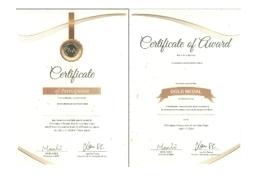
In addition to production standards, the company has also received product-related awards as follows:
|
Award Images |
Applied to products |
Description |
|
|
Yes Care (Yes Care) |
On June 6, 2023, received an award from China at the China (Shanghai) International Invention & Innovation Expo 2023. in Shanghai, where the company received a gold medal and an international award from the World Intellectual Property Organization for its research on extracting active ingredients from marigold flowers. |
|
|
Yes Care (Yes Care) |
On April 19, 2024, received an award from Switzerland at The 49th th International Exhibition of Inventions Geneva in Geneva, where the company received a silver medal, having been selected by the National Research Institute for its marigold flower extraction process, which has undergone optometric testing with ophthalmologists. |
|
|
CMF (CMF) |
On July 4, 2024, received an award from Japan at the Japan Design, Idea and Invention Expo (JDIE 2024). in Tokyo, where the company received an award from an international invention and innovation competition, having been selected by the National Research Institute for its research on dietary supplements. |
|
|
Astra Oil (Asta Oil) |
|
|
|
Spray Janhom (Spray Junhom) |
|
|
|
Stretch Mark Protection Nourish Body Cream and Anti-Stretch Mark Revival and Booster Cream |





Marketing and Sales
Production processes that meet manufacturing standards are crucial for ensuring product stability and consistency, building long-term trust with business partners and consumers. This also strengthens marketing by focusing on aggressive market expansion to make products widely known among target groups, thereby driving continuous sales growth for the company, through the following marketing approaches:
-
Closely monitor target customer behavior trends to provide recommendations on products in market demand.
-
Plans marketing and implements comprehensive online and offline marketing communication strategies (Omni-Channel Marketing) through both online and offline channels to enhance efficiency in reaching a broader and more thorough consumer base, while creating a convenient and fast shopping experience to meet consumer behavior in the digital age.
-
Possesses processes to efficiently respond to customer needs and expectations, including listening to feedback and suggestions at various stages, from product satisfaction to after-sales service, to encourage repeat purchases.
-
Systematic customer data management, confidentiality, and data security. The company has a policy to maintain customer data confidentiality and strictly adheres to data security standards.
Plan Areas
| Plan Area |
|---|
| Responsible production and services for customers |
| Communication of product and service impacts to customers/consumers |
| Development of customer satisfaction and customer relationship |
| Protection of customer personal information |
Customers — Satisfaction Results
Customer Satisfaction Results
| Metric |
|---|
| Evaluation results of customer satisfaction |
Customers — Targets
Has Set Customer Targets
No
Customers — Performance & Outcomes
Has Performance Results
Yes
Performance Description
Through the implementation of both online and offline marketing communication strategies (Omni-Channel Marketing), the company has diverse and distinct sales channels to meet consumer demands. Different product purchasing channels are provided to make marketing and sales more accessible and broader for consumer groups. For example, dietary supplements and cosmetics are sold via live broadcasts through various channels, in addition to traditional offline sales channels, utilizing an O to O (Online to Offline) strategy by collecting customer databases from online channels to expand sales through offline channels.
The company already possesses online and offline customer databases. The company will consolidate customer data into a data repository, with the IT department responsible for collecting data in the system and allocating data proportions to the Outbound unit and the TeleSales unit. This data will be used for customer follow-up calls to provide after-sales service and encourage repeat purchases. The company places importance on data analysis and management as follows:
-
Customer Data Management: The company utilizes a modern CDP (Customer Data Platform) system for systematic storage and management of customer data, enabling efficient tracking and analysis of customer information. This analysis is based on purchase history and customer follow-up history.
-
Customer Needs Analysis and Forecasting: Continuously incorporating customer feedback and suggestions to improve products and services in line with customer requirements.
-
Customer Communication and Service: There are various contact or communication channels to collect information from customers, such as telephone, email, and online channels, to facilitate customer inquiries or complaints. There are also customer purchase history reports to enable the customer relations team to continuously offer products to customers.
-
Customer Relationship Development: Providing special benefits to regular customers, such as exclusive discounts or gifts on special occasions.
-
Customer Satisfaction Monitoring and Evaluation: The company has a customer follow-up team for product reception, customer care after consumption, and continuously collects customer feedback and suggestions.
-
Customer Data Confidentiality and Security: The company has a policy to maintain the confidentiality of customer data and strictly adheres to data security standards. Access to and use of customer data are rigorously controlled and monitored to prevent data breaches.
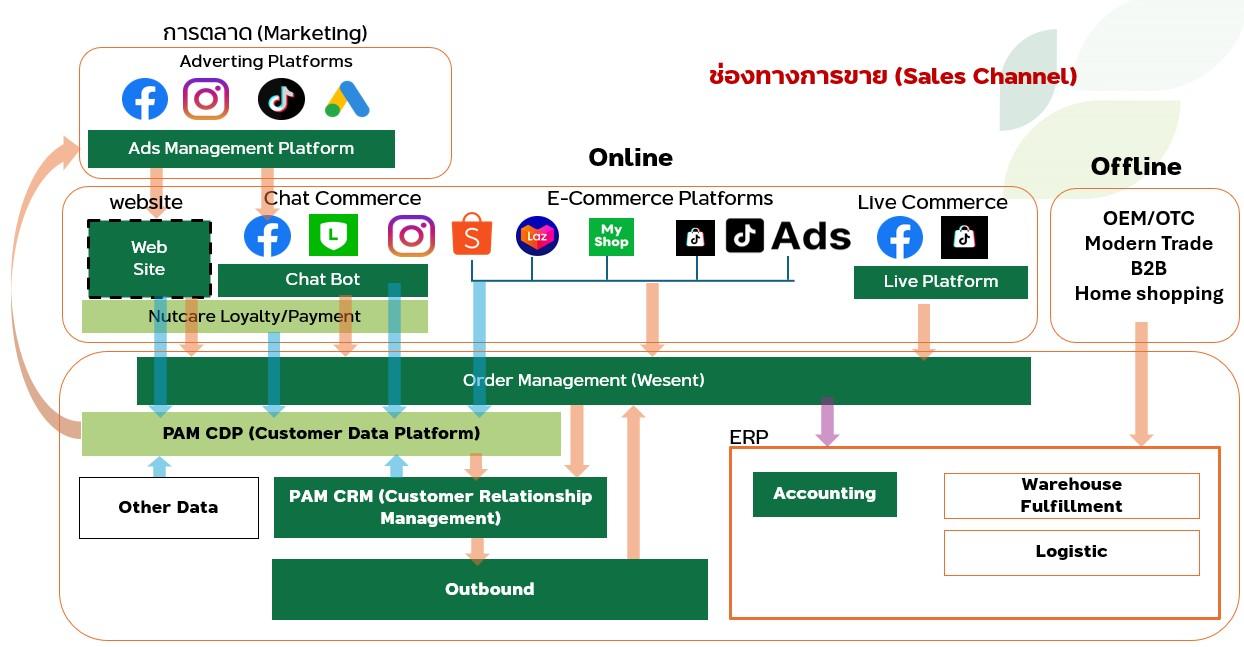
Image : Illustrates the collection of customer databases from online channels to expand sales through offline channels.
Community & Social — Plan & Guidelines
Has a Community & Social Plan
Yes
Plan Description
The company recognizes the importance of environmental issues and is committed to reducing environmental impacts, as well as continuously improving and developing its environmental management system, with responsibility towards the community and society as a whole. The details of the practices are as follows:
-
Strictly comply with laws and other regulations related to the company's operational activities.
-
Focus on waste management by properly collecting, sorting, and disposing of waste, and improving the company's environment to prepare for emergency response.
-
Protect the environment by focusing on preventing pollution resulting from the company's operational activities, both directly and indirectly.
-
Promote and support employees in developing environmental awareness, efficiently reducing the use of resources, energy, and consumables. Environmental management communications will be disseminated to all employees, including contractors and relevant external agencies.
-
The company will cooperate and promote safety activities, including environmental conservation, with stakeholders, and support the procurement of environmentally friendly products and services.
-
Monitor and review established objectives appropriately and effectively to ensure continuous improvement of the environmental management system.
Plan Areas
| Plan Area |
|---|
| Employment and professional skill development |
| Education |
| Religion and culture |
| Forests and natural resources |
| Sports and recreation |
| Occupational health, safety, health, and quality of life |
| Disadvantaged and vulnerable groups |
| Water and sanitation management |
| Reducing inequality and promoting social equality |
Community & Social — Targets
Has Set Community & Social Targets
No
Community & Social — Performance & Outcomes
Has Performance Results
Yes
Performance Description
Recognizing the importance of environmental conservation and managing various pollution issues that may arise from the company's operations, the company has established the following guidelines:
Efficient resource utilization
Electricity management: As electricity is a crucial resource for business operations, the company has implemented energy-saving measures, including maintaining air conditioners according to manufacturer standards, a lights-off project during breaks or in unused areas, selecting electrical appliances with Energy Label No. 5, and installing solar-powered lighting in outdoor areas.
Paper reduction and recycling: The company reduces paper usage by promoting double-sided printing and the use of electronic files, with the goal of reducing paper consumption.
Fuel consumption: The company provides employee shuttle services to reduce carbon dioxide emissions, as well as lunch benefits for employees to reduce plastic waste and ensure water usage is appropriate for various related activities.
Furthermore, a facility management department is established to inspect utility systems, such as electrical appliances and water supply systems, to ensure the company's energy-efficient practices.
Waste disposal
The company separates and collects waste and refuse for disposal by engaging external service providers. The company adheres to the standards specified by relevant laws. Furthermore, the company emphasizes maximizing the efficient use of natural resources by contracting Akkhie Prakarn Public Company Limited for the destruction of substandard products and packaging. This company is capable of disposing of industrial waste in liquid, sludge, solid, and infectious forms in a scientifically sound, safe, and environmentally friendly manner using modern technological mechanisms.
Management for reducing greenhouse gas issues
The company recognizes and is committed to reducing greenhouse gas emissions and fully cooperates, promotes, and supports various activities that help mitigate global warming. This is for the verification and certification of the organization's carbon footprint at a Limited Assurance Level by the Thailand Greenhouse Gas Management Organization (Public Organization). In 2023, the company began collecting its greenhouse gas emission data to serve as a baseline for setting reduction targets in 2024. In March 2025, the company scheduled the verification of its greenhouse gas emissions for 2024. The company has established a carbon footprint policy as follows:
-
Promoting, supporting, raising awareness, and enhancing understanding of efficient energy conservation and management, as well as climate change, among personnel at all levels to build confidence for the group of companies, shareholders, stakeholders, and business partners.
-
Collecting relevant greenhouse gas emission data from organizational activities to assess greenhouse gas emissions and removals.
-
Conducting activities that reduce the impact of greenhouse gas emissions and planting trees to enhance biodiversity as carbon sinks.
-
Promoting and campaigning for the collection and management of waste for reuse.
-
Furthermore, the company received the Green Industry Award, Level 2 Green Activity, from the Ministry of Industry, for its activities aimed at reducing environmental impact, issued on December 26, 2024.
-
Data from the organizational carbon footprint verification report, with BSI Group (Thailand) Co., Ltd. as the verification body, covers the period from January 1, 2023, to December 31, 2023. The organizational carbon footprint is based on 879 tons of CO2e per year, as shown below:
|
Scope |
GHG quantity (tCO2e/year) |
Proportion compared to Category 1 and 2 |
|
Category 1 |
298 |
33.90 |
|
Category 2 |
581 |
66.10 |
|
Total Category 1 and 2 |
879 |
100.00 |
|
Category 3 |
881 |
|
|
Others |
- |
Additionally, the company has joined the Thailand Carbon Neutral Network with the Thailand Greenhouse Gas Management Organization (Public Organization).
Law Violation Incidents
Law Violation Incidents
| Metric | Current Year | Previous Year | Two Years Ago |
|---|---|---|---|
| The total number of cases or incidents of significant violations of laws or regulations regarding social and human rights (Cases) | 0 | 0 | 0 |
| The total number of cases or incidents that cause significant labor disputes (Cases) | 0 | 0 | 0 |
| The total number of cases or complaints related to consumer rights violations (Cases) | 0 | 0 | 0 |
| The total number of cases or complaints related to partner rights violations (Cases) | 0 | 0 | 0 |
| The total number of cases or incidents that cause disputes with the community/society (Cases) | 0 | 0 | 0 |
| The total number of cases or incidents related to cyber security or customer data breaches (Cases) | 0 | 0 | 0 |
| The total number of cases or incidents related to safety and occupational health at work (Cases) | 0 | 0 | 0 |